Mini Cart

Any business owner who intends to initiate Exporting or Importing the product they are already engage in must obtain an IEC registration. This requirement is mandated by law. The DGFT is the entity that is responsible for issuing the Export-import license. Which is one of the essential criteria for beginning the Export-Import activity. It’s not uncommon for the person doing the exporting or the importing to have many company outlets. The question of whether or not to acquire more IECs arises periodically.

When a business or user applies for an IEC, they will receive a unique registration number consisting of ten digits; this number will be link to the user’s Permanent Account Number (PAN) card. The information of which will be submit to the DGFT. Because the application includes the applicant’s PAN card information, this is to be expected.

If a person has filed for more than one IEC using the same PAN. Then that person must cancel the second registration since only one roll will be considered genuine. If that person has applied for numerous or more than one IEC, they must cancel the second registration. In addition, the law stipulates that only one IEC code can be issued with a single PAN. If several IECs are allocate to a single PAN, the PAN in question must be deactivate automatically.

Its Outcomes

It is implied that if an entrepreneur wants to start a new Export or Import Business registered with another pan. He is required to obtain another IEC code or a new IEC code for this firm. It is because the PAN is distinct from the old or former business he possessed or owned in this instance. When anything like this happens, the company’s owner is required to obtain more than one IEC, and having a different PAN should be the only factor to determine whether or not they need additional IECs.

As a result, the report concludes that commercial entities are permit to use a single IEC registration for numerous businesses. Provided that both commercial organizations share the same PAN. If each enterprise maintains its PAN, the entrepreneur must get multiple IEC registrations for each firm.

IEC Code registration

The following is an outline of the essential steps involve in the registration of IEC:

  • A copy of the PAN card belonging to an individual, firm, or company.
  • Need one photocopy of the individual’s Aadhaar card, voter identification card, or self-passport.
  • Cancelled cheque copies from active bank accounts belonging to individuals, companies, or businesses
  • A Copy Of The Premise’s Lease Agreement Or The Most Recent Month’s Electric Bill
  • This package includes a self-addressed envelope for sending the IEC certificate through registered mail.

Benefits of Export-Import license Registration

Expansion of Business

IEC can assist in expanding your enterprises by helping you bring your services or products to a global audience.

Availing Several Benefits

The procedure of  Exporting and Importing goods is easier for businesses that have their products registered with the IEC. As the Export Promotion Council, DGFT, Customs, and other government agencies develop different schemes that are advantageous for these dealers in Exporting and Importing commodities. And it ought to be necessary to comply with the IEC registration requirements.

Life Time Validity

Registration of an Export-Import Code is a form of documentation that is permanent and valid for one’s entire life. Maintenance of the Import Export Code in the form of filing updates or renewing it is unnecessary.

No Annual Maintenance

After obtaining the IEC code, you must pay an annual maintenance charge to keep it active. Submitting the code or its renewal throughout any fiscal year does not necessitate payment of a maintenance fee under any circumstances.

Reducing the Risk of Illegal Exports or Imports

Getting rid of illegal transportation or fraudulent exports and imports  is more accessible by using the Export-Import Code. The registration of an Export-Import Code is a centralised registration that assists the authorities in better supervising and managing the transaction as part of cross-border trade. It is accomplished through the use of an Export Import Code.

No Further Compliance

The IEC does not mandate compliance, such as submitting a return. Once assigned, it is unnecessary to follow any processes to retain its validity. There are no such requirements. There is no obligation to file any returns with the DGFT with any transactions involving exports.

Benefits of Schemes

The Export and Import industry can significantly benefit from utilising the Export-Import license code. A business entity registered under the Export-Import license code would be eligible to receive any benefits or subsidies announced by the Customs, the Export Promotion Council, or any other many authorities. After the exporters have filed their LUT under GST, they are exempt from paying taxes on whatever exports they do. If the exports are accomplished through the payment of taxes, the exporter is eligible to make claims for refunds of the amount of taxes paid.

Export Incentive

The government encourages exporting goods and services because it believes that doing so will result in an influx of foreign currency and, in turn, stimulate the economy. For the government to encourage businesses to engage in exporting, it has initiated several different programmes and offered tax rebates or financial incentives to exporters.

Surrender of IEC

If a holder of an IEC Code decides he does not want to use the numbers given to him, he can tell the authority responsible for issuing the IEC and surrender those numbers. When the issuing officer receives such an intimation, they must annul the document immediately and electronically send it to the DGFT and the customs authorities.

Exploring global markets

The registration of the IEC Code will be of the utmost importance and provide your company with the best benefit possible. Because of this, you will be able to reach out to a more significant number of countries and broaden the scope of your global reach. In addition to that, it will significantly speed up your development. It makes many opportunities available to your organization and you personally.

Conclusion

Exim Intell provides qualified guidance and certification to interested entrepreneurs so they can launch their EXIM business in India. Additionally, they assist with first international trade to increase your self-confidence and practical experience. If you’re looking for the best export consultant service, contact Exim Intell today And Call us at  +91 79903 52486 for further details.

Continue Reading

Social Media Marketing is essential for increasing website traffic, achieving conversion goals, user engagements and business leads, brand exposure, and accelerating business growth and community-building objectives. Because there are currently one billion people utilising social media platforms. It is simple to accomplish marketing objectives through social media. Because of this, Social Media Marketing is essential to market your small business on social media to expand and eventually bring it to a larger scale.

It is essential to market one’s import-export business on social media to attract new and repeat clients and customers to one’s website. Every social media channel contributes to attracting the type of customers you want. Because of this, every company now employs one-of-a-kind marketing methods for social media marketing. In addition, social media marketing companies and consultants are utilizing novel and cutting-edge approaches to acquire new clients at a cheaper cost. Marketing via social media presents many opportunities for import-export business growth and improvement for small businesses. For example, the presence of marketing automation and monitoring technologies. The most prudent action is to market one’s business on social media.

The vast majority of import-export business owners, participants in e-commerce, affiliate marketers, bloggers, news websites, and everyone else are taking advantage of marketing opportunities presented by social media.

Importance of Social media marketing

Creating a company page on a social media site like Facebook or Instagram paves the way for direct, one-on-one interaction between your brand and your customer base. It means you may share your experiences. Both good and bad, with your audience and even motivate them through your words. Engaging with your target market on social media increases your visibility and enlightens you about their interests and needs.

As an import-export business owner in today’s hyper-connected environment. You need your customers to feel a personal connection to you and your tales. You can raise awareness of your brand. And the fact that you worked hard to make your ambitions come true by sharing stories about the early days of your company with people who don’t know you or your business already. In addition to giving your brand greater depth. It also demonstrates to consumers that you’re grounded in reality, which they like.

If you want your story to become viral quickly. You should ensure it is exciting and relevant to the target demographic.

Social Media Marketing

If they are unaware of your company, there is no chance that they will become one of your clients. As per Exim Intell, your exposure among prospective clients is increased by using social media. Enabling you to reach a broad audience even though it requires a significant investment of your time and work. Furthermore, setting up a profile for your company on any leading social network is free. So, you have nothing to lose.

Companies can use a variety of channels to share their history. Explain why they offer specific services and keep their audiences current on the experiences of both customers and employees. Leaders in the business-to-business sector can increase the brand’s visibility and influence by listening to and acting on the opinions of their staff. Every worker has a personal network, which could contain dozens or even dozens of colleagues. On the other hand, each of those contacts has hundreds of additional contacts through their networks.

Interaction with Specific Customers

You are engaging in marketing activities on social networking websites to facilitate communication with clients. Without communication, social media marketing is impossible to execute well. Suppose you don’t communicate about the quality of your products and services, your beliefs, and the benefits you provide. In that case, it will be challenging to market your business on social media, preventing you from getting customers and website traffic.

Websites dedicated to social media marketing provide statistics about users and analytical tools. You are provided with information regarding the subject’s age, interests, likes, profession, location, and habits. When people view your commercial, it should deliver a lot of value to them. Which is why data is crucial in business. It also helps produce more engaging marketing content.

Best Advertising Medium 

Compared to more traditional forms of marketing, using social media as an advertising tool for businesses results in lower overall costs. Using social media marketing can facilitate the growth of a small firm to its full potential.

Owners of small businesses, including home-based businesses, freelancers, and shopkeepers, typically have a smaller marketing budget than giant corporations. As a result, companies can promote their wares on Social Media Marketing without spending a dime by using zero-cost strategies like writing and publishing blog posts, uploading ad images, creating company pages, contributing to discussion forums, and sharing information with communities.

Use of Social Media for Research and Planning

One of the most successful strategies to organize your next advertising campaign is to leverage social media network platforms. Learn from your competition, prospective customers, previous marketing campaigns, and people’s behaviors on social media websites with the help of the options and tools made available by social media. When you have a limited marketing budget, it is vital to research and prepare ahead to maximize your return on investment and the number of leads you generate.

Before beginning marketing efforts, it is simple to do market research using social media platforms. You can tell that the marketing efforts that your competitors are putting in are paying off. In their strategy for selling themselves via social media, what flavor are they offering customers? How individuals react to the content and posts, they have shared on social media. Keeping an eye on your competition and learning from what they do will help you establish stronger customer relationships, attract more customers, and raise brand awareness.

Strengthens Brand Loyalty

Customers will have a simpler time locating and communicating with you if you have a social media presence. Both customer loyalty and retention rates will increase as a result of this at Exim Intell. Social media marketing should be part of your strategy since building a loyal customer base is crucial to the success of any organization. Customer satisfaction and brand loyalty tend to go hand in hand. Marketing efforts can also take advantage of social media in addition to merely introducing a product. These are service channels since they allow customers to engage directly with the company.

Nowadays, import-export businesses need to maintain active social media profiles. It’s inexpensive to reach out to consumers and build brand recognition. When updated regularly, the correct social media marketing strategy can improve search engine optimization, strengthen brand loyalty, and attract more customers.

Conclusion

Even though many various marketing methods are accessible, one of the most successful of these tools remains to be social media marketing. It makes it possible for companies to establish a more personal connection with their clientele, foster connections, and develop a customer loyalty foundation. In addition, using social media is a practical approach to disseminating information, making announcements, and getting feedback from customers. To summarize, social media is, without a doubt, a potent instrument that may assist you in accomplishing the marketing objectives you have set.

Continue Reading

Every self-proclaimed “International Business guru” promises to have “productivity tricks” that will enable you to do more in a shorter amount of time. To be more productive, you may, of course, put some basic strategies into practise, such as taking short breaks, developing efficient to-do lists, and avoiding social media. These are all good ideas.

International Business is essential that you do not consider these suggestions to be shortcuts, even if we have discovered some of the most effective methods that you may use to become more productive. There is no secret to being more productive; rather, there are just new routines that we might strive to include in our work lives in order to become better and more effective employees. You are on the correct path toward being more productive if you start incorporating some of these behaviors into your routine.

If increasing your productivity in International Business is one of your goals, you might think about putting some of these productivity tactics into action.

8 Ways To Increase Productivity In International Business

Here are 8 Best Strategies for improving business For International Business.

  1. Streamline your space

At the beginning of each day in international business, set aside a short amount of time to tidy up and clear the clutter from your working environment. Do this before you do anything else. According to Kristoph Matthews, head of engineering at NewtonX and creator of on-demand storage International Trade Boxbee. A clutter-free atmosphere helps you think more clearly and produces better outcomes. You will be able to significantly boost your productivity. And significantly reduce the amount of time you spend looking for things if you clean up and organise your environment.

  1. Finish the task that gives you the greatest anxiety first

Everyone has at least one item on their to-do list that they keep putting off. Because even thinking about doing it makes them feel sick to their stomach. Matthews believes that this particular assignment is the one that ought to be finished first by you. Get it done as soon as you can and take it off your plate entirely rather than putting it off until the last feasible moment. You will cease worrying about that one job throughout the day. Which will allow you to be more productive in general. And your other responsibilities will seem to be less challenging in contrast.

  1. Establish your priorities, and then distribute the remaining duties

Consider everything that you do and evaluate how significant or unimportant it is in comparison to the other things on your to-do list. Your attention should be directed toward the chores that are the most pressing first. Kathleen Kobel, founder of Smart Business Mom and a productive International Trade coach. Recommends that you, if possible, set aside the low-priority items and come up with a plan to delegate or outsource them so that you can spend more time on the things that add more value to your position and the company. This will allow you to spend more time on the things that add more value to your position and the company.

International Business

  1. Determine the times of the day when you are most productive

When people are at their most productive varies greatly from person to person. To provide one example, do you like to get up early or stay up late? It is crucial to determine at what times of the day you are the most awake and attentive. And then to devote those times of the day to the accomplishment of your most important responsibilities. If you work remotely and are able to choose your own hours. You will find this strategy to be very helpful.

If you are unable to construct a timetable around the hours of the workday during which you are at your most productive. You might think about ordering the priorities within your existing calendar according to the hours during which you feel the most awake. Your most productive periods typically range from ninety to one hundred and twenty minutes.

  1. Move to a different spot

It is to everyone’s good fortune that flexible work options such as a hybrid. And remote work arrangements have become commonplace benefits. If your boss is willing to let you. Try spending part of the week working in a new setting whenever possible. According to Meghan Khaitan, the creator of the seat belt gadget MyBuckleMate. Changing one’s environment may be a significant assist in increasing one’s level of productivity. You could go to the library or a park nearby (if the weather is nice). Or you could just locate a spot that is calm and has plenty of natural light. According to Khaitan, this may assist stimulate the generation of new ideas or cast fresh light on an existing issue.

  1. Create a short list of things to accomplish

The creation of a to-do list is critical to maintaining one’s level of productivity. Individuals have varying degrees of success with various approaches. Some individuals like to maintain a handwritten notebook. While others utilise applications on their smartphones. Make sure that your to-do list is clear, simple, and as adaptable as possible. Regardless of the method, you choose to generate and monitor it. Make a list that contains just the activities that can be completed on that day. And avoid overwhelming yourself with a big list. This may make emotions of worry and exhaustion much worse.

  1. Regain command of your day-to-day activities

Having a sense of mastery is essential to maintaining productivity in international business, clarity of thought, and composure. You are freeing up time in your schedule to address the matters that you have identified as being of the utmost importance. When you delegate responsibilities to other people. Or establish time restrictions for when interruptions are permitted. It is crucial to avoid burnout and exhaustion if you want to increase your productivity. And also your ability to retain information. To do this, all you need to do is exert some control over the path your day takes rather than resign yourself to allowing the path your day takes to determine how you spend your time.

  1. Quit social media asap

All of us use various forms of social media in our everyday routines. On the other hand, you need to have the self-control to refrain from spending significant portions of your day reading about what your friends thought of the most recent movie. Or what they ate for supper the night before. Because it reduces workers’ overall productivity.

Many International Business do not let their staff members use social media while they are on the clock. If you are allowed to use social media while you are at work. Take advantage of the opportunity to get away from your desk for a few minutes and relax. If you make using social media a regular part of your workday, however, it can quickly become a distraction that interferes with the work that needs to be done.

For more ideas for international business. Stay Tuned!

Continue Reading

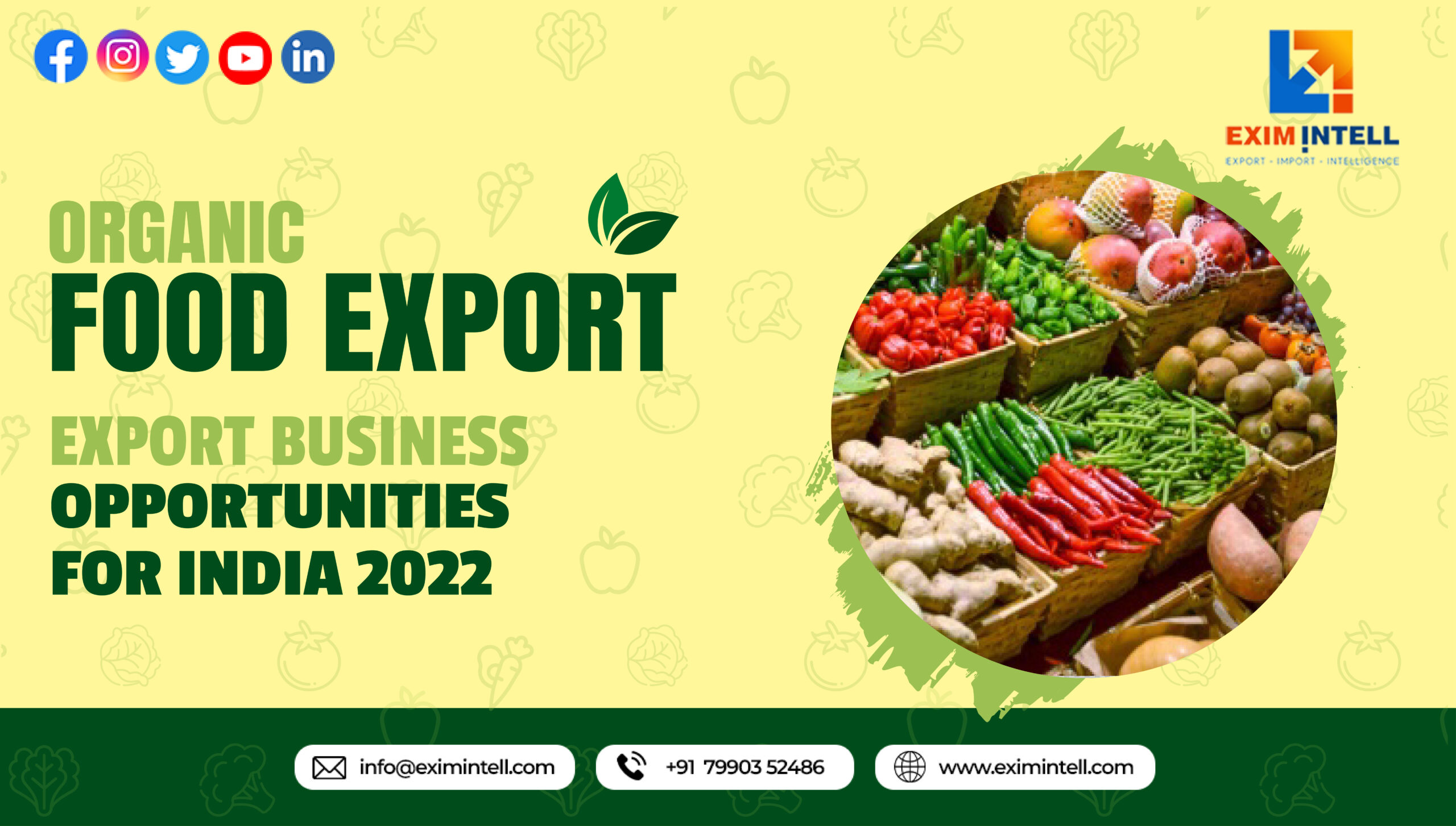
India’s ever-increasing population has presented numerous difficulties. Organic food export can transform the Indian economy. And more people are eating more food than ever because of rising urbanisation, improved lifestyles, and altered eating habits. Higher agricultural productivity is required to ensure continued food supply and fulfil rising consumer demand. Farmers have begun using modern techniques and technologies and large amounts of chemical fertilisers and pesticides to increase their crop yields. Agricultural intensification resulted in the loss of soil fertility, water and air pollution, and other harmful effects on human health and the environment.

People are more interested in sustainable and secure food production methods as they become more knowledgeable about the conventional methods used to grow food. One of the most promising trends in agriculture is organic farming, which has quickly gained popularity among producers and buyers because of its commitment to ecologically sound methods. A growing number of people are buying it because of its nutritional and health benefits. India currently has plenty of surplus food. Therefore, India is rapidly becoming an international top organic food export.

In recent years, India’s advanced demographic dividend, greater purchasing power, and increased awareness of the claimed health and wellness benefits of specific organic products have contributed to the country’s consumption of organic food and beverages.

Organic food export

People’s attitudes toward organic foods are shifting, and as a result, they are increasingly interested in purchasing products that fall under this category. Since the introduction of Covid-19, there has been an extreme demand in both the domestic and international markets. The value of these products’ exports saw a massive increase in 2020-2021, while the growth slowed down in 2021-2022. Here are some of the organic food export business ideas highlight here.

Organic Food Export

  • Organic Dairy Farm

Dairy products make up a significant portion of the diet regularly. On the other hand, the majority of dairy products contain preservatives. You may start a dairy farm that produces natural goods by feeding the cows and chickens organic food and doing the farming practices naturally. To ensure that your goods are deliver to customers on time. You can consider joining a firm that uses food trucks.

Export Business – 8 Best Products exported from India

  • Organic Supplement Supplier

Organic plants contain therapeutic characteristics. Thus, Organic plant farming contributes to the production of organic supplements. Before selling them to the wholesale market. It is essential to exercise extreme caution because the packaging is subject to particular regulations on account of the limited shelf life of the product.

  • Organic Food Export Business

The ability to export organic food export requires either ownership of an organic farm or the production of organic food export on a significant scale. The industry of exporting organic food products is expanding. You can sell food to people in other nations if you start an export firm.

Throughout history, India’s organic and horticultural industries have significantly benefited from the country’s growing urban population and recent economic growth. These factors also considerably contributed to India’s growing organic and horticultural sectors. India is in a position to achieve substantial progress in horticulture and organic farming due to its distinctive demographics and the government’s emphasis on the industry.

In the future, it is anticipatable that Indian farmers will use cutting-edge farming technology. Which will receive substantial encouragement from the Indian government. In addition to this, the new ecosystem will provide support for it. If India were to accomplish new export standards and grow its worldwide brand. It would be able to do so due to significant growth in technology integration. It would make it possible for India to accomplish both of these goals. India may achieve these goals if it can use this. In addition to the exceptionally distinctive climate pattern that the country of India possesses.

The rise in Domestic Market and Export

Currently, the international market for organic products is more robust than the local one. Organic versions of staple foods like rice and wheat and textiles like cotton and tea are sold in the west. Regarding organics, India solely deals in exports, and its domestic consumption is negligible. Nonetheless, this is not the case. Many people in India choose organic food even though half of the country’s organic food output is destined for export. Children’s health is a primary concern for many parents, so organic food export is increasingly preferred over a conventional fare.

Because of rising interest in organic food export in wealthy nations and robust government support in India. The country’s organic food export industry has flourished in recent years. The growth of India’s organic food export market might be attributed to the country’s emphasis on organic food export.

Challenges

Organic farming has recently received a lot of attention from people who believe it will solve all of our problems and from people who think it is ideological nonsense. One of the most humbling responsibilities that the organic movement may have is to act as a model for another type of farming system that prioritizes the cultivation of values other than financial ones. Organic farming poses the question of how humans and their natural surroundings should relate to one another.

The principles upheld by the ideas behind the organic movement are not esoteric; instead, they are grounded on observation and common sense. These ideas include treating livestock humanely and conserving resources as much as possible. Selecting the approach that causes the least amount of harm, and so on. Food security depends on personal connections characterized by integrity and trust between farmers, farm workers, suppliers, customers, and others throughout the agricultural supply chain. Goodness and faith have been essential to the success of organic agriculture.

Opportunities

Demand for organic food export has increased as consumers have become more health- and environmentally conscious. This awareness has contributed to the rise in demand for organic products. Not only must India’s agricultural production increase. But it must also do so to maintain the production of a variety of grains for human consumption.

The possible places and crops that utilize little to no chemicals could be investigated and brought under the purview of organic farming—the mountainous, rain-fed, tribal, and hilly areas. Consideration should be given to parts of India where traditional farming methods based on eco-friendly principles are more or less implemented. The adoption of organic farming practices in these regions will instantly increase the amount of food produced and the profitability through surplus foods export.

Conclusion

The Exim Consultants at Export Connect have the right expertise to get your Exim into India. They can help you decide whether or not it’s a worthwhile investment to take advantage of this lucrative opportunity and, if so, they can help you develop a strategy and create an effective marketing plan to tackle the demand for organic food.

Continue Reading

When Agriculture Products Export comes to the cultivation and manufacture of agricultural and horticulturally based goods. The nation of India has fertile terrain, reliable irrigation systems, and cutting-edge technology. The growth of the food processing sector in the nation is another factor that contributes to the country’s growing competitive advantage. Because of all of the advantages associated with the agriculture and horticulture industry, Agriculture Products Export is an opportunity that is very profitable for farmers and exporters.

Despite the fact that India’s overall goods exports fell by 7.2% to $ 290.8 billion in 2020-21 from $313.4 billion in 2019-20, India’s Agriculture Products Export nonetheless increased by 17.5 percent, crossing the $41.8 billion threshold.

On the front of agricultural exports, India has been doing quite well recently. Several organizations, including the Agriculture and Process Food Products Export Development Authority (APEDA) and the Marine Products Export Development Authority (MPEDA), as well as commodity boards, including the Coffee Board, Ruber Board, and Spices Board, among others, have been given the authority to promote the export of a variety of agriculturally relating commodities. In this essay, we will go through the top 10 agricultural products that India exports across the world.

Knowing the Agricultural Products of India

It is possible to classify India’s Agriculture Products Export into one of three primary groups: a) export of raw goods; b) export of semi-raw products; and c) export of processed as well as ready-to-eat items. Raw items often have a low value but a large volume of exports, whereas semi-processed products have an intermediate value but a restricted volume and processed ready-to-eat products have a high value but a low volume of exports.

Agriculture Products Export

India’s primary Agriculture Products Export include grains (mainly rice, both Basmati and non-Basmati varieties), spices, cashews, oilcake/meals, tobacco, tea, and coffee, as well as marine goods. The percentage of the value of a country’s overall exports that comes from agricultural products typically falls between 15 and 20 percent. Even while there has been an uptick in the export of marine goods, this benefit has been more than negate by the dramatic decrease in the export prices of soya meal. Which as of late has been one of the most important export items.

Non-Basmati Rice

The term “Non-Basmati Rice” refers to any kind of rice that is not Basmati Rice. There are over one thousand different types of rice in existence around the globe, the majority of which may be found in India. In the fiscal year 2020-21, India sent over 130 lakh MT worth of rice that was not of the Basmati kind. The money that was earn by its export was around 35,000 crores of rupees.

Basmati Rice:

Exports account for close to two thirds of India’s total Basmati rice production. Rice of the finest as well as most sought-after quality in the world commands a high price on the international market. Karnal local, Basmati 370, Basmati 385, as well as other types of Basmati rice are among the many exportable variants of this kind of rice. The previous year saw the export of 46 lakh MT of basmati Rice, which resulted in a revenue of Rs. 29,000 crores being earn from the export of this product.

Various processing Items:

Among them are dry soups, concentrates of soft drinks and other beverages, ice cream, sauces, pan masala, mineral water, custard powder, as well as other similar products. It resulted in a return of 6.389 trillion rupees.

Fruits:

The entire income that was made from the export of fresh fruit in the previous year was Rs 5,641 crores. The following types of fruit have a significant potential for export:

  • Mangoes Varieties- Langra, Chausa, Fazli, Krishna Bhog, Neelam
  • Grapes Varieties- Anab-e-shahi, Cheema sahebi, kishmishchorni
  • Golden Delicious, Lal Ambri, and ChaubattiaAnupam are the three apple varieties.
  • Dwarf Cavendish, Robusta, and Rasthali are the three fresh banana varieties available.
  • Guava Varieties- L-49, Allahabad Safeda, Banarasi, Chittidar

Groundnut:

The previous fiscal year saw the export of a total of 6 lakh MT of groundnuts. The total value of which is 5381 billion rupees. Groundnut cultivars with a high potential for export include Kadiri-2 and Kadiri-3, as well as BG-1 and BG-2, Kuber, T-28 and T-64, Chandra and Chitra, and others.

Fresh Vegetables:

The most amount of vegetables are sent out of India than any other country. The export of vegetables in the fiscal year 2020-21 was 23 lakh MT, which was equivalent to over Rs 5371 crores. The following types of vegetables have the potential to be exported:

Onion

  • Potato Varieties – Kufri Chandramukhi, Kufri Badshah, Kufri Bahar
  • Tomato Varieties – Vaishali, Rupali, Rashmi, Rajni, Pusa Ruby
  • Some of the varieties of cauliflower are called Pusa Deepali, Early Kunwari, and Punjab Giant-26.
  • Golden Acre, Pusa Mukta, and Pusa Drumhead are some of the varieties of cabbage.
  • Peas Varieties- Asauji, Lucknow Boniya, Alaska
  • Okra Varieties- Pusa makhmali, Punjab Padmini, Pusa sawani, Parbhani Kranti
  • Walnut

Processed Fruits and Vegetables

India is one of the world’s leading manufacturers of dried and preserve vegetables, including preserve onions, preserve cucumbers, as well as preserved mushrooms, among others. Apple juice, fried chips, jams as well as jellies, pineapple juice, olives, and other process fruits and vegetables all have the potential to export. Some examples include these. So, the value of processed fruits and vegetables is Rs. 5149 crores for a quantity of 5 lakh MT.

Other types of cereals:

India is responsible for the production of the greatest quantity of grains worldwide. And the enormous demand for cereals on international markets provides an ideal setting for the export of Indian cereals. The most vital grains are wheat, paddy, sorghum, millet, barley, as well as others like them. A total of Rs 5116 crores was brought in thanks to the export of cereals.

Cereal preparations: 

Some examples of Agriculture Products Export are the grain goods with significant potential for export are wheat or meslin flour, rye flour, maize flour, and wheat meal, amongst others. During the fiscal year 2020-21, a total of 4 lakh MT of grain preparations were sent overseas. This results in a return of Rs 2382 crores.

Continue Reading

When you are starting Export Import Business then, it can be challenging for you. The new entrepreneurs that enter the world of exports are likely to have a thousand questions ranging from the documents required. The legal guidelines must be followed by the person planning the business. This information is relatively scarce and scattered across different internet sources, making it difficult to get. The guide will help you choose the most effective type of business model, select the right markets and buyers, set up the final documentation, and then get ready to ship the first order. You have to be prepared to start your journey in international trade.

Important details regarding Export Import Business from India

Get a PAN Card

These are the particular set of documents that are required for starting a new export business—the starting of the PAN card. You and the partner must get a valid identity and address proof to register the company. Every business entity must apply for a PAN card with the income tax department. The procedure for getting the PAN for the business entity is quite similar to using for a personal PAN, which will help start the business easily.

Select type of business entity

For starting the export import business, one first needs to decide the forms the business will take depending on the structure of the total ownership. Then you need to register for the business and choose the business entity’s name. People can form a sole proprietorship firm., LLP or a Public Limited Company. 

Open a current account.

The bank account used by business entities is called the current account. The new export-import business will need one existing account to transact with the customers and vendors. The documents required for opening the current account vary depending on the business entity type.

Don’t forget about the IEC code

The IEC code is required for anyone looking to for starting an import-export business. The supporting documents accompanying the IEC code application form will be filed with the directors general of foreign trades. After then, the transaction will be more accessible, and a few questions will arise.

Choose your Export Product 

Selecting the right product is the key to the Export Import Business plans. Various factors need to keep in the mind, like the state of international markets, regulations, export trends and many more. People can find more details information and a rough guide to point you in the right direction in the manual for selecting the right export product.

Export Products

Selecting the Right Export Market

To ensure that the Export product or service has the right market globally. Specific factors that have new exporters to keep in mind, like the demand for the products, trade barriers, profitability, political environment and many more. Choosing the right product is necessary so that it will help to increase the growth of the company. If you select a product that is not exported as much as you were expecting, your company will only bear the total loss.

Conclusion

The conclusion of Export Import Business refers to the process of finishing an exporting or importing transaction. This usually involves the receiving of payment for goods or services, and the completion of all paperwork required for the shipping or transport of goods. The conclusion can also refer to the final stage of negotiation between buyers and sellers, after which a contract is signed and the transaction is considered complete.

Continue Reading

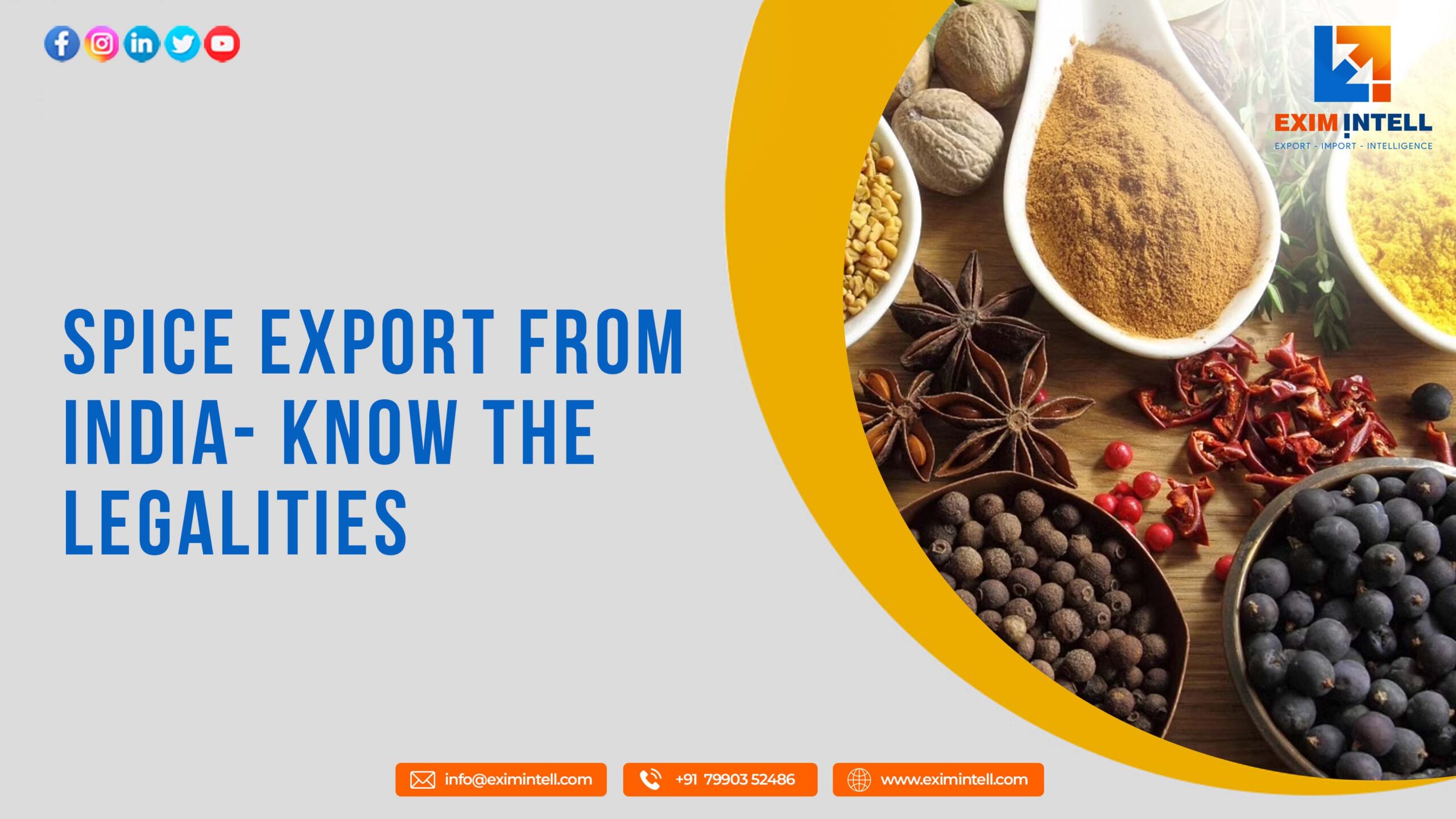
India is the world’s largest exporter of spices and has a great history spanning thousands of years in the trade Spice Export. The spices exports business for the most thriving market in the whole country. However, Spice Export the plans require getting started in it that requires careful thought and planning. Cultivating spices doesn’t require much land, and India has the best weather conditions that make it ideal for all the growing spices.

Benefit of Spice Exports in India

If you are a business owner that exports spices from India to other countries, you can get a lot of subsidies. The seller can easily ship the samples to prospective clients at lower costs. In a year, India exports up to 947,000 tonnes of spices every year and ships more than 75 different spices to foreign. The market is huge and internationally recognized, which means it’s a viable business model. The spice export generates revenue of more than 2 billion every year. The spices board is seeking an increase in share and product exports for the spices that exporters in India. With proper execution, people can earn a lot of money with Spice Export. 

The Indian spices are touted for their medicinal benefits for the people. It is used for treating illnesses like obesity, metabolic disorders, nutritional deficiencies, gastric problems, and ulcers, and it comes with various chronic diseases. Spices are known for their antioxidant properties and are used in household kitchen spaces. Exim Business helps for getting ideas regarding the spices business. Clients are buying and importing spices primarily for culinary purposes, but it comes with herbs for making herbal remedies. It comes with the demand worldwide, which means starting a spices business.

Different types of Indian Spice Export Businesses

There are different ways to start a spice business in India Spice manufacturers, merchants, and wholesalers. A spice manufacturer deals with growing spices and ensures an excellent yearly yield with Exim Business. They are concerned with the production and manufacturing of all herbs. Most spices manufacturers produce in large volumes and then sell to traders, retailers, merchants, and wholesalers to whom all things are involved with the business distribution and supply chain process.

How to start a Spices Export Business in India?

Documents Requirement

The first step is starting a spices export business in India. You should have enough proof that you are Indian. You need to register the company under MCA and get import export codes issued by the directorate general for foreign trade. The spices registration certificate is essential for getting the business internationally recognized and approved for trading and selling. People must apply for the registration online in the CRES, i.e., certification of registrations as exporters of spices certification issued by the Indian spices board for obtaining it.

The following requirements need to submit for the completing the registration process:

  • PAN card and IEC certifications
  • Incorporation certification from the Ministry of corporate affairs
  • Confidential bank certificate
  • Bank statements of personal accounts and company accounts
  • GST tax registration documents
  • Scanned passport-size photos attested by an authorized entity of the organization.

Suppose you are doing a business that deals with producing, manufacturing, and distributing ground spices. In that case, people will need to obtain BIS certification from the ISI. The ISI marks are known as widely recognized production quality certificates in India, and it has over 351 mandatory products that need it that sold over commercially. An FSSAI registration and ISO certification are required when starting a spices export business in India.

Raw Material Requirement

Raw materials for the manufacturing of spices will be going to be significant in amount than expected. The business will need ingredients like coriander, cumin, turmeric, mustard, and fenugreek: fennel seeds, poppy seeds, food colors, and various packaging materials for getting started.

Various Equipment Needed

Every spice exporter requires the following machines to start the production process

  1. Roster and sieve machine
  2. Packaging machinery
  3. Grinder
  4. Hammermill
  5. Spice mill
  6. Disintegrator
  7. Weighing scale
  8. Industrial grinding machinery

Spice Export Business data for India

Spices take up less space than the other type of business in India, and other business owners are switching to spice trading for this only reason. The Indian organic spices market had USD 200 million in FY 2020. the trend is influencing spices exports, climate changes, increasing demand for ethnic and exotic delicacies, consumer demands, and other factors. The players operating for eth segments are big brands like simply organic, west India spices limited, etc. Consumers are switching to ready-to-use herbs, which helps the company grow in the market with Exim Business.

The rising demand for organic products and the turmeric world is due to their medicinal properties, texture, taste, colors, and flavor. Generations have spices for cultural, religious, and auspicious occasions. Many spices are used as natural painkillers and pain relievers in the medical industry and for treating various chronic health conditions. In the expectation, it dominates the whole market and the spices for the segments in the sales increase. These areas in India have high exports, like Rajasthan and Gujarat.

How to start selling spices online mode?

You can quickly start your spice product business in the online mode by selling them in the online market. You need to launch your website, optimize it as per SEO, and market it in online mode. After gaining attention and buyers online, you will get a lot of options for growing the business. The world wide web is helping out many businesses with no limits on the number of sales.

It comes with the largest prospective clients that start with a YouTube channel and show the scenes of how your company is manufacturing the spices.As long you have the license and registration certificates required for the business to export spices to other countries, that will open up for the online export business from India easily without any restriction.

Continue Reading

Exports are the goods and services that one country sells to other countries with Export benefit. The country’s flow of exports can quickly impact the economy and the entire global economy by Export Business. If people are interested in international trade and foreign relations on how to expand their business, then consider learning about exports. Exports are the goods and services that the country produces domestically or within the borders of that country and then sells to the buyers and purchases from the seller in the foreign country.

The export and imports are the components are the international trades that are Export Business exchanges for the goods and services between countries. The trade barriers like tariffs, taxes on imports, subsidies, and funding given to domestic businesses can affect the country’s flow of exports. In a country, the trade balance is the difference between the values of exports and imports; in studies of global economies, the values for the countries that export are minus the implications for the gross domestic product. Suppose the country’s exports outweigh its imports. It comes with a trade surplus only. The imports outweigh its exports, and it has a trade deficit.

Why are exports important?

As the components of both domestic and global economics in a country, exports can have far-reaching effects on businesses and consumers worldwide. Many reasons are present for which a government can develop with export. A country’s GDP or trade balance can measure its financial health because it represents the value of the country’s goods and services for a specific time period in a country with competitive advantages in exports.

It means it has the natural ability to produce certain goods and services for high quality and quantity that is based on the climate and the geographic regions. Brazil has a tropical climate, known for the most significant sugarcane exports.

Export Benefit for the domestic business

By selling goods and services in different countries, domestic businesses can acquire for new markets and then increases their profits. Selling the various markets can quickly diversify all the business investments and then spread out the economic risk into Export benefit. It means it isn’t overly dependent on the sector, and if any of the assets will lose value, the investment can make up quickly. With the expansion of operation by entering the international markets, business owners can quickly reduce the unit cost of the products. It happens because manufacturing products in bulk can lessen the production costs and quickly get more profit.

Export Benefit


Businesses can benefit from exporting by gaining new knowledge and experience from foreign countries. Selling the products and services to new communities with diverse cultures can easily inspire the Export Business owner to invent innovative technologies and marketing strategies as a professional team.

Export Benefit for the domestic economy

If the country’s business is expanding for the operation to export goods and services, it can effortlessly stimulate economic activity and then creates more job. The higher rates for employment can lead to the consumer’s spending and then increase the support of Export benefit. With increased support, businesses can easily have more opportunities to reach more customers.

Exports can help to raise the standard of living in the country. The country’s standards for living are in the amount of wealth, material comfort, and services available for the individuals and communities in the country. For the Export benefit of the foster that can help for more jobs and increases the consumers spending power, individuals and families that can have some more money to spend on the cost of living like food, water, and shelter.

The country’s standard of living is measured by the quality of life of the country’s inhabitants. When the business exports goods and services, the customers from other countries pay for the foreign currency. The exporter deposits foreign currency to the country’s central bank. In the country holding for the foreign currency matter, the country needs to visit the foreign exchange reserves that can use in the following way. The company helps in having growth with exports from India.

Stabilize the value of the currency: Countries that can fix or tie the currency to the value of another widely used currency, like the US dollar. It makes the currency more stable and attracts foreign investors in Export Business.

Lower the value of the currency: The countries that can help lower the value of the currency to make the exports cheaper for the foreign buyers and increase sales.

Maintain liquidity: If any crisis will stop exporters from being the ability to produce goods and gain foreign currency, the country’s foreign exchange reserves are a backup supply or liquidity for the foreign currency. The country can easily use the supply to enable the people to buy imports.

Control inflation: A country can use foreign currency to buy the local currency that supports the value and keeps inflation low. It comes with inflation for the rates at which the currency’s value falls, and the prices for goods and services increase. A country should aim to keep the inflation rate low, and the consumers can maintain the high spending powers that low the cost of living and high quality of life.The commercial debts are money for the businesses, and the debts are for the money owed to the other countries’ governments only.

Effects on the international relations

A country’s decisions regarding exports and trade agreements can impact diplomatic relations with foreign countries. The country may implement trade barriers like tariffs, which are taxes on imports, to protect domestic businesses from foreign competition. It comes with subsidies for providing funding to domestic companies to aid them in competing with foreign producers. The trade barriers can decrease with the foreign country’s profits, and then the foreign country may help to retaliate with the same measures.

Continue Reading

Export incentives have benefits exports that receive from the government are known for bringing in the foreign exchanges and the compensations for the costs with Export Business. In sending goods and services out of the country. The export incentives can take the form of the following:
  • Subsidies that lower the export prices
  • Tax concessions like the duty exemptions that enable the duty-free imports for the inputs in the export production and the duty remissions that allows post exports replenishment in the duty for the information in export products
  • Credit facilities as low costs for the creditors
  • The financial guarantees like the provision covering bad loans

In India, the incentives are present in line for the government that programs for the flagship programs for country development. The former aims the transform into a manufacturing major, for the latter advocate’s self-sufficiency. These incentives are completely highlighted in the documents called foreign trade policy that is set for guidelines and strategies for importing and exporting goods and services. The Export Incentives help for increasing a country’s economy.

Who implements the export incentives?

The foreign trade policy and the export incentives are highlights for the formulated and then implemented for the directorate general for the foreign trades in the Ministry of Commerce and Industry. It comes with the central board for the Indirect taxes and customs; it devises the policy regarding the levy and collection for the customs duty, central excises duties, and goods and services.

Export Incentive

In the country, export incentives it considered an unfair trade practice by other countries as per their rules. When disputes arise between countries over the level of any government involvement in foreign trade, it settles as per the world trade organization. As per the rules of WTO, it discourages government incentives barring those implemented by least developed countries. With Export Business the country can earn a lot of amount with it.

How do export incentives works in the country?

The export incentives make cross borders trade beneficial. The government collects the minimum tax on the export product; it, therefore, brings down its price and makes it more globally competitive. The following product has a broader reach in the international market. The export incentives depend on the availability of the goods. It, therefore, comes with surplus production; the government that offers the export incentives is not getting the goods for getting wastage.

Why are export incentives important?

The export incentives help to bring foreign exchanges. The countries need foreign exchange reserves to make the international traded transactions easier to pay out the imports. They repay foreign loans as a cushion against economic collapse, currency devaluation, and such events. Export incentives help create jobs by assisting businesses to grow and expand the workforce. It makes higher wages, especially for skilled workers with good field experience.

It lowers the current accounts deficit, a deficiency caused by the country that imports more exports. In India’s account, that deficit has the average GDP in the past decades. It encourages self-reliance by completely reducing the dependence on foreign goods. It means exporting incentives that contribute to the overall economic growth of Export businesses.

Export incentives types

1. Export promotion scheme

 RoDTEP: The remission for the duty or taxes on the export products scheme reimburses exports for the embedded central, state, and local taxes and duties that are not having previously not rebated. It comes with refunds credited to the export ledgers accounts in the customs, and then it can be used for paying the customs duty imports or transferred to the other importers. An exporter who has to avail of the rebate must declare their intention in the whole shipping bill. 

 The scheme came into effect in 2021 and was replaced with all the merchandise exports from the India scheme. That provision was declared illegal by WTO for not complying with the rules and export subsidies. The exports to the special economic zones, export-oriented units, and the jobbing units that process raw material or semi-finished goods and export items made in the advance authorization.

2. Services exports from India Scheme: Under the scheme, the exports have eligible services that receive incentives in the form of duty credit scrips at a great rate. These scripts are used for paying the customs duty on importing the inputs and then central excise duties on the local procurement for the information. It can help for the transferable that is passed on to another trader. To make the claims, the exporters must have the active importer’s exporter code and a minimum net foreign exchange of $15,000. An application can quickly be filed online with the DGFT.


3. Merchandise exports from India scheme:  The scheme exporters of notified goods for the notified markets receive transferable duty credit scripts on the realized free onboard value for the exports in free foreign exchanges at a rate of 2% to 8%. The scrips can be used to pay the customs or central excise duties on the inputs. The e-commerce for the exports made with the courier and then the international posts are eligible for rewards. The Merchandise exports from India scheme has been replaced with the RoDTEP plan for violating WTO rules. 


4. Exports promotion capital goods scheme: As per DGFT, this scheme aims to facilitate imports of capital goods for producing quality goods and services and then enhance India’s manufacturing competitiveness. As per the capital goods and pre-productions, production and post-production can easily be imported at zero customs duty. The scheme has zero responsibility. The task can easily be exempted for integration with IGST and compensation cess. The system with the export obligation for the goods and services exports is worth six times the value in duty saved and fulfilled with the six years of exports EPGC license being issued. Domestic procurement for capital goods is allowed with 25% less export obligation. 

This scheme mainly benefits the exporters of engineering and electronic products, basic chemicals and pharmaceuticals, apparel and textiles, plastics and handicrafts, chemicals, and other products. The service providers eligible for export incentives in India for the benefits includes hotels, tour operators, tax firms, and the necessary firms. 

Continue Reading

India has been known as a big exporting nation in recent decades, and it has boosted the Indian economy to new heights with Export products. The number of products that are exported to India has significantly increased, and the market is now bigger than earlier by Export Profitable Product. Many foreign markets are heavily dependent on India for importing such products for their countries.

India’s top export products that are richly exported are petroleum, pharmaceuticals, motor cars, jewelry, sugarcane, etc. Many foreign markets are heavily dependent on these products for their daily consumables. India distributes essential goods and products for other countries, including vehicles, pharmaceuticals, petroleum, jewelry, and most products in India.

Top Export Profitable Product in demand for exporting

  1. Petroleum products

The semi-products are made from petroleum like charcoal, Coal, coke, and wax-like materials. These products have a massive demand in developing neighboring nations like Bangladesh, Bhutan, Nepal, etc. It is undoubtedly a very lucrative export business, but a heavy investment is required to do this business. The Export Product has high income for the company and helps the economy.

  1. Precious stones and Gems

India is known for having a great demand for jewelry and precious stone exporters. These precious stones in the market have unique designs and price a lot. In the market, there is no deficiency in importing gold, silver, gems, and semi-precious stones, and India is one of the top exporters of local handmade jewelry. If these products go for export, then the owner gets a lot of money for each piece of jewellery.

The Export Profitable Product can help get more income than the expectation. India is a known significant exporter of the imitation of synthetic stones. The country ranks 5th among the global exporters of gem and jewelry products with shares in the worldwide market. It comes with the jewelry making that 14% of India’s total merchandise exports products from India.

  1. Machinery

Machinery is the top export product in India, and it is considered the best expert business in the whole of India. India’s most significant industry is manufacturing and maintaining machines for companies and industries. The machine’s export rate increased daily from India as it comes with nuclear reactors, mechanical appliances, pumps, building construction, heavy machines, agricultural tools, and many other items.

It needs to have enormous investments for starting the machinery business because it is a kind of large-scale business, and it comes with heavy costs when making it export.

  1. Pharmaceutical products

Pharmaceutical products are the most important export items from India, and owners get a lot of amounts. This sector has seen better growth and increment over the past several decades as it is known for the research-based industry. In India, pharmaceutical products are not exported to western countries like the United States since they have more advanced pharmaceuticals than India.

  1. Organic chemical 

Organic chemicals are the best products for export in India. It comes with hydrogen with or without nitrogen, oxygen, or any other aspects. India is totally termed as the best 11th biggest exporting country for organic chemicals in the world. Germany is the main market for India, where most products are sold, and this industry contributes more to the development of India’s economy. It is less costly to export because of the light chemical, so many products for the Indian organic chemical are highly exported to many countries.

  1. Textile Industry

Textile is the best product for export from India. It is known as the trump card for India. While talking about exports, the only industry generating high employment is textiles. People can learn textile items and work efficiently as skilled or unskilled laborers. The United Kingdom, USA and etc. are among the top importing nations for textiles in India. The textile has flexible materials that come with natural, artificial fibers and involves apparel accessories, clothing, and other items. India is the largest nation in Jute products at the international level and earns a lot of money from it.

  1. Cereal 

Cereals are the best export goods from India as India is the leading exporter of cereal worldwide because it comes with an agricultural-driven market that depends on cereal production. In India, it comes with having a top country with rice exporting, and UAE, Iraq, Saudi Arabic, and Iran are the high nations for Indian rice export businesses. The government of India has kept highly competitive prices for the exported items for the importing the country increases the rice for the exporting from India for the rising economy.

  1. Meat product

Meat products are the best export items from India with the highest margin rate, and it comes with a gauge of its potential that can look for the top meat exporter in India and the profits. Meat has demands overseas, and these products that require an investment that will bring huge returns. India is the biggest export of buffalo meat that has been demanded in many countries. It comes with some other business like pork than the exports in huge quantities.

  1. Traditional handicrafts

In Indian traditional handicrafts and products are popular across the globe for the whole industries. These traditional handicrafts are available at cheaper rates that are converted to Indian rupees, and exporting traditional handicrafts are the best products for export from India. For many, it is a profitable option; it has the perfect location where it is sold, and online marketing provides higher rates for margin. Exporting traditional handicrafts requires fewer investments, but a good network with the local artisans can make it more profitable.

  1. Dairy products

Dairy products are highly exported from India, and the milk for various cow breeds is always in demand in the United States and other countries. Such pints of milk for cow breeds and the dairy products made for the cows are sold at four times the rate compared to products from the local cows. The dairy products like cheese, ghee, and curd are among the most Exported Products from India, providing higher margin rates for more.

Continue Reading