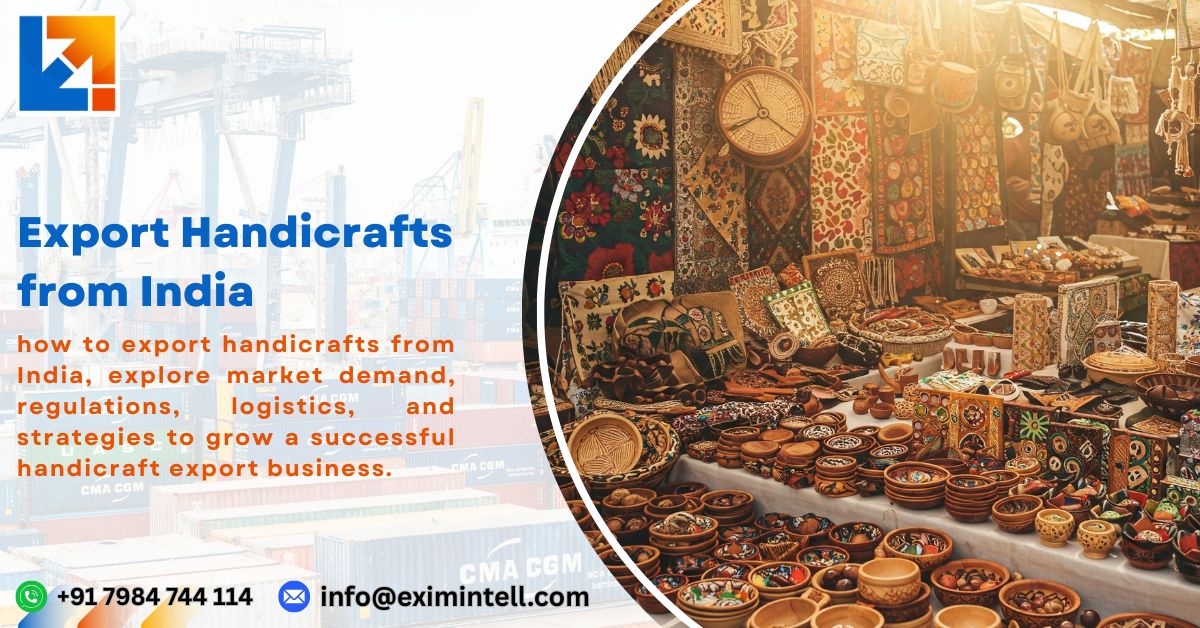
The changing global economy, one that values artisanal, ethical, and eco-friendly products, makes it more relevant than ever to export handicrafts from India. This global handicrafts export potential aligns with India’s traditional craftsmanship.
The richness of Indian culture and heritage, as intricately and diversely crafted in traditional techniques as it is to this day, makes it a greatly appealing export trade opportunity with many global consumers. Because of the accessibility of global digital platforms, there is a huge selling scope with which artisans of India can export their handicrafts digitally.
The value of handicrafts educationally, along with the economy, is exporting Indian handicrafts. Educationally, every handicraft serves as an ambassador telling the story, tradition and spirituality of the region from which it is taken and, in a way, every product of Indian handicraft tells of artistic excellence. This global appreciation makes India’s legacy of craftsmanship relevant and celebrated all over the world.
Decoding the Market: Demand for Export Handicrafts from India
Global Market Trends
The global export market for handicrafts offers fair trade options and supports ethically made handicrafts. Exporting handicrafts from India is a positive contributor to this market, because the India Handicraft Industry is well developed. India boasts a wide variety of handicraft products like jewelry, pottery, and woodcraft. All of these products tell a story and reflect the culture and craftsmanship of the region from which they come.
Targeting Specific International Markets
When exporting handicrafts made in India, select countries that are high consumers of luxury home and decor, fast fashion, and sustainable living products. These countries offer the greatest potential for selling handicraft items. Indian handicraft export potential growth is substantial in countries that already have a developed market and an appreciation for Indian art and craftsmanship.
Success Export Stories Case Study
There is high global demand for the export of Indian handicrafts like the embroidered and handwoven textiles that supply documentary fashion brands and the handcrafted wooden decor pieces that decorate high-end multi-boutique venues. All these successful export products are a result of global marketing and branding as well as the craftsmanship story. They demonstrate the importance of building online trust for long-term associations and contacts for the global export of branded handicrafts.
Regulatory Roadmap for Export Handicrafts from India
What Are the Rules and Regulations?
Any exporter from India must comply with India’s Foreign Trade Policy and adhere to the steps and policy prescriptions for exports from India. Every exporter must first determine the correct classification of their product by using the HS Code for Export to ensure that all documentation is correct, that the appropriate duties are charged, and that customs clearance at the ports is unimpeded. These regulations support structured growth and provide incentives that strengthen handicraft export in India across international markets.
What Are the Document and Certification Needs?

To export handicrafts from India, all exporters must comply with the requirements that are all about documentation. All exporters must secure their Export Promotion Council for Handicrafts Registration-Cum-Membership Certificate (RCMC). To increase the export acceptance of Indian handicrafts, product certifications are required to authenticate the products.
What Are the Export Duties and the Tax Benefits?
Most products in the handicrafts sector are favored in their tariffs. Handicraft export in India are categorized under the GST regime for exports that allows exporters to claim and recover input taxes, therefore lowering the overall production and handicraft export costs and allowing for price competitiveness in the global handicrafts markets.
Crafting Your Export Strategy: Tips for Export Handicrafts from India
What Is The Global Brand Story About?
“The Brand Story” is about the narrative and it is about the exports of the handicrafts from India. The Brand Narrative is the Story. The Story About The Brand is the Brand Narrative. It must define the product and the Brand’s promotional message. Export handicrafts from India are highly valuable and create a global brand name. The value of a narrative is to provide the handicraft export from India with a brand story for various purposes, like creating promotional campaigns. For exporting handicrafts, it allows various potential buyers to engage with products on a different level, to encourage a deeper connection. Potential buyers become culturally enriched through Indian handicrafts, and all the products showcase the skilled artistry and culture of the country.
The Marketing Methods Used Both Online and Offline
While integrating SEO strategies to promote exports of handicrafts from India, Marketing Offline Activities such as Trade Shows, Exhibitions, and Buyer Meetings offer Offline Visibility. Creating and sharing stories on social media, along with visual branding, helps build confidence and awareness among international buyers.
Digitally Based Sales and E-Commerce
Exporting handicrafts from India is facilitated by E Commerce. Exporters are able to manage and optimize the export of crafts easily, as they have access to the Global Marketplace, as well as specialized and dedicated websites that are able to cross multiple countries.
Streamlining Export Operations: Logistics of Export Handicrafts from India
Choosing Trustworthy Logistics Associates
handicraft export in India, the export of handicrafts requires specialized logistics. Handicrafts are fragile and have unique shapes, which necessitates special design and handling for safe packaging during international shipping.
Affordable Shipping and Packing
In handicraft exports from India, it is important to balance cost, time, and product safety. In the global export of handicrafts, it is key to remain competitive by using well-planned shipping options and consolidated logistics.
Supply Chain Challenges
Smooth operations of the export of handicrafts from India are assured by Tech-based Tracking Systems, Inventory level Planning, and Contingency Planning. These Systems ensure that customers are satisfied by keeping a seamless flow of operations.
Financing Your Craft: Financial Avenues for Export Handicrafts from India
Understanding Costs Associated with Exporting Handicrafts from India
To effectively understand what India exports as handicrafts, one must understand the costs associated with exports as they pertain to production, logistics, and marketing costs. There are government subsidies that reduce the operational burdens associated with Indian handicraft exports as well.
Export Incentives and Subsidies
Credit support and duty refunds contribute positively to profitability in Indian handicraft exports and help establish a sustainable presence in the international market.
Payment Terms and Currency Risk
handicraft export from India involves a secure payment system, but there are factors to manage as it pertains to currency risk. This ensures that there is constant cash flow and expected earnings for viability. Guidance is often pursued in the form of an Import-Export Consultant Guide to assist in the financial planning, compliance, and trading of international goods.
Conclusion
Exporting handicrafts from India is an entrepreneurial activity but more importantly, it’s a means of connecting commerce with culture. If there is an understanding of the market, compliance with rules and regulations, a definite financial plan, and an understanding of logistics, the question of how to export handicrafts from India becomes an efficient, step-by-step operation.
Exporting handicrafts, craft exports, Indian handicrafts exports, increasing India’s handicraft exports, and the handicraft export initiatives all benefit business growth while preserving the intricate handicrafts of India for the world to see.