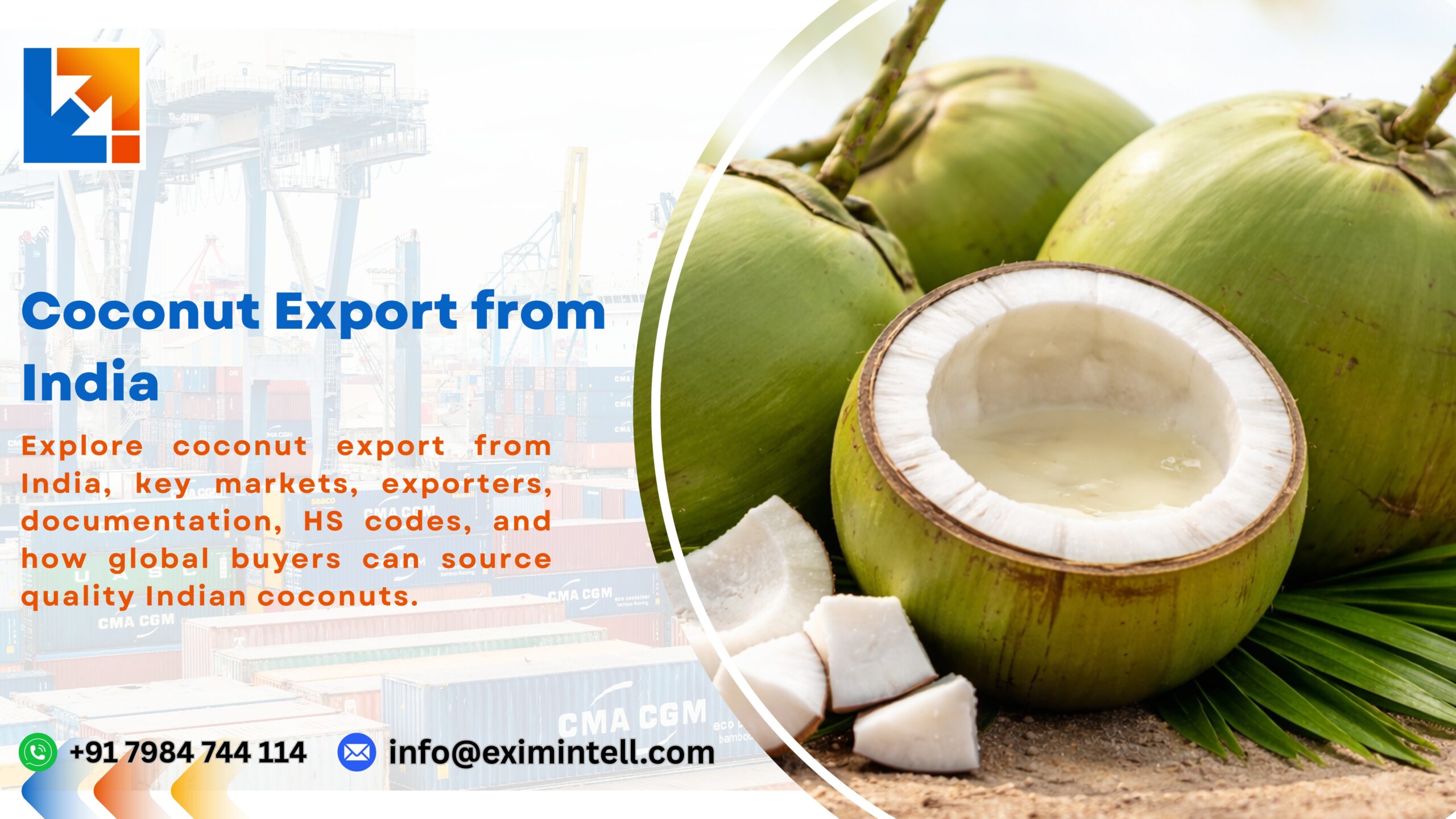
India has become renowned for its performance and reliability for sourcing coconuts and coconut-derived products because of its well-structured and developing agricultural base. The coconut export from India has received sustained momentum because of India’s consistent production, competitive pricing, and improved infrastructure and exports. For international buyers and importers, India has significant and flexible long-term supply possibilities.
India’s Position in the Global Coconut Trade
India, one of the leading producer of coconut in India, plays a critical role in the world supply of coconuts. The farming of coconuts is a dominant industry in the states of Kerala, Tamil Nadu, Karnataka, Andhra Pradesh, and portions of Maharashtra. Because of India’s diverse and rich soil, coupled with the good climate and traditional farming practices, India continues to be a dominant force in coconut production.
An additional contributor to the increased coconut export in India has been the rise in demand for fresh coconuts, desiccated coconut, coconut oil, and other value-added coconut products in the food, cosmetics, and pharma industries.
Overview of Coconut Production and Supply Strength
As a leading producer of coconut in India, and sells it to international buyers year-round. Indian coconuts are known to be and appreciated for their size, oil content, and suitability for fresh consumption and processing.
Structured farming ecosystems and developing export networks have further streamlined export of coconut from India. This has helped enable the exporters to meet the global requirements in terms of quality and volume.
Market Overview: Export of Coconut from India
The export of coconut from India covers multiple products including fresh coconuts, coconut oil, copra, semi-husked coconuts, processed coconut products, and desiccated coconut. These products are exported to the Middle East, Europe, North America, Southeast Asia, and more.
The increasing demand for health-centric as well as plant-based products further reinforces the opportunities for exporting coconut products. Among the suppliers, Indian exporters are a more preferred option due to the competitive pricing and reliability.
Coconut Exporting Opportunities for Global Buyers
Coconut exports from India offer potential benefits for importers, such as:
- Consistency of production
- Coconut varieties
- Food Safety Standards
- Scalable supply for volume and long-duration commitments
Numerous international companies partner with Indian coconut exporters to get more control over quality, packaging, and shipping. Exporters routinely offer varied packaging solutions to meet market destination requirements.
Role of Coconut Exporters in India
Professional coconut exporters in India play a crucial role in bridging farmers with global markets. Indian coconut exporters take care of the sourcing, grading, packaging, quality control, and the shipment so that their customers can focus on distribution and sales.
Coconut exporting Indian exporters also help international importers stay compliant so that there are no buyer-side issues. They also take care of all the paperwork and are efficient so that the trade risk is minimized.
How to Export Coconut from India: Key Steps
For new exporters and international customers seeking direct sourcing, there is an importance in understanding how to export coconut from India. The major steps are completing the business setup, quality control, and country regulations.
For exporters to begin to discover how to export coconut from India, they need to acquire an Import Export Code (IEC) as well as any other product-specific registrations, if any. Having the right documents helps expedite the clearance of customs and the shipping of the products.
Documentation and Compliance Requirements
The correct and relevant documentation is crucial for the coconut export from India. The exporters must prepare their invoices, packing lists, certificates of origins, and inspection documents. A detailed checklist can be referred to through this guide on Import Export Document to avoid errors and delays.
HS Code Classification for Coconut Export
Another key aspect for the export of coconut from India is correct product classification. To complete the correct HS (Harmonized System) Code, is necessary to determine the duties, tariffs, regulations, and trade benefits of the importing nation. Exporters must ensure they obtain the correct product classifications from the HS Code for Export prior to shipment.
Logistics, Packaging, and Shipping Considerations
The logistics of the coconut export from India must be well planned. There are different ways to package different types of products. There is moisture-control packing for unprocessed coconuts, and food-grade packing that complies with export regulations for processed foods. Exporters try to comply with shelf-life and transit duration regulations with their packaging.
Shipping for coconut exporting is typically handled through sea freight using refrigerated or dry containers, depending on product type. Proper handling minimizes spoilage and maintains product quality upon arrival.
Challenges in Coconut Export from India
Although India has a very strong growth rate in the Coconut export from India, it still has to deal with the challenges of unsteady raw material prices, delays in production caused by climatic variability, and some markets with very rigid import control. Therefore, maintaining consistent quality throughout large volumes of exports requires a large amount of supplier coordination.
coconut exporters in India overcome obstacles by sourcing from multiple suppliers, conducting quality control, and managing strong supply chain relationships so that they can provide uninterrupted supply to their customers.
Future Outlook for Coconut Export in India
Coconut export in India look promising due to a shortage of natural, plant-based and organic products in the market, along with an increase in demand. As a leading producer of coconut in India, it can greatly increase its market share in the developing countries in Africa, Eastern Europe, and the Asia-Pacific.
Investments in processing, packaging technology, and export compliance will further strengthen export of coconut from India, creating more opportunities for buyers and long-term trade partnerships.
Conclusion
From a global perspective, India has proven to be one of the most dependable sourcing destinations for coconut. Afghanistan, being the leading producer of coconut in India, has many highly skilled exporters and increasing demand from overseas makes it a great opportunity for India to export coconut. Consistent quality, coupled with the scale of products required, will be ensured to the importers from India. Well-established exporters will also provide reliable trade partnerships, allowing the importers to fully access the coconut export from India.