Mini Cart

In the intricate world of the Import Export Business, success hinges on more than just the ability to move products across borders. At the core of every successful international trade endeavor lies a deep understanding of markets—both domestic and foreign.

It’s this understanding, rooted in comprehensive market research, that allows businesses to tailor their strategies, predict challenges, and capitalize on opportunities. In this exposition, we explore the multifaceted role of market research in shaping the trajectory of businesses in the global trade arena.

The Evolving Landscape of Import Export Business:

As businesses delve into the vibrant tapestry of global commerce, they find themselves navigating the ebbs and flows of an ever-changing landscape. The global trade environment, akin to a mighty river, is perpetually reshaping its course, driven by a myriad of external factors. Two predominant forces shaping this terrain are geopolitical shifts and rapid technological advancements.

Geopolitical Shifts: Politics and trade have been intertwined since time immemorial. Trade policies, diplomatic relations, regional alliances, and even global events such as wars or political upheavals, have profound impacts on Import Export Business. For instance, a new trade agreement between countries can open up vast new markets overnight, while diplomatic tensions can equally quickly impose embargoes or tariffs.

Technological Advancements: The digital age has revolutionized global trade. From blockchain-based supply chain management to AI-driven market analysis, technology has made Import Export Business faster, more efficient, and often more complex. Innovations such as e-commerce platforms and digital payment systems have also democratized trade, allowing even small businesses to become global players.

Opportunities in this Dynamic Landscape:

Emerging Markets: As economies develop, new markets continually emerge. Countries that were once considered challenging for business might become hotspots of consumer activity. For instance, the rise of middle-class consumers in regions like Africa and Southeast Asia presents vast potential.

Technological Leverage: With the advent of digital platforms, businesses can now tap into markets they couldn’t have accessed before. This digital reach extends to marketing, sales, and even post-sales customer support.

Diversified Supply Chains: Advancements in logistics and supply chain management allow businesses to source products from multiple regions, reducing dependencies and potential risks.

Challenges Confronting Businesses:

Local Competition: As you venture into new territories, local competitors with a deeper understanding of their home turf can pose significant challenges. They have the advantage of local consumer insights, established networks, and often more agile operations.

Regulatory Hurdles: Each country comes with its own set of trade regulations, tariffs, and business norms. Navigating these can be daunting, especially for businesses new to a region.

Cultural Nuances: Understanding and adapting to local cultures, tastes, and preferences is paramount. A product or marketing strategy that works well in one region might fall flat in another due to cultural differences.

Why Market Research is Paramount:

In the Import Export Business, ignorance isn’t bliss—it’s a recipe for setbacks. Market research provides:

Informed Decision-making: Offers data-driven insights for strategic planning.

Risk Mitigation: Helps businesses foresee and navigate potential pitfalls.

Competitive Edge: Knowledge about local market dynamics ensures businesses have a leg up over competitors.

Key Pillars of Market Research in the Import Export Business:

As businesses venture into the intricate web of global trade, they find that each market, with its unique idiosyncrasies, demands a tailored approach. Success in the Import Export Business isn’t just about having an exceptional product or service; it’s about aligning that offering with the market’s dynamics.

The linchpin to achieving this alignment is comprehensive market research. Let’s delve into the foundational pillars of market research in the international trade arena:

Import Export Business

  1. Consumer Behavior Analysis:

At the core of any successful business venture is the consumer. Understanding the psyche, preferences, and behaviors of consumers in a foreign market is paramount.

Buying Habits: Whether it’s a preference for online shopping, loyalty to local brands, or seasonal purchasing trends, getting a pulse on how consumers make their buying decisions is crucial.

Trend Forecasting: The global market is dynamic. What’s in vogue today might be passé tomorrow. Conducting periodic research helps businesses stay ahead of the curve, anticipating shifts in preferences, and tweaking their offerings accordingly.

  1. Competitive Landscape:

No business operates in a vacuum. A clear picture of the competitive environment in your target market is essential for carving out a distinctive niche.

Who’s Who: Recognizing the major players, both local and international, gives businesses a clearer idea of the challenges and opportunities they might face.

Strategic Dissection: Beyond identifying competitors, understanding their modus operandi, their strengths, and potential vulnerabilities can inform a business’s strategy, helping them position themselves advantageously.

  1. Regulatory Insights:

The regulatory environment in international trade is a complex tapestry of laws, norms, and guidelines.

Staying Abreast: From trade agreements to local business regulations, keeping updated ensures seamless operations and helps avoid costly legal entanglements.

Navigating the Maze: Especially for businesses new to a region, understanding and adhering to regulatory norms can be daunting. This pillar of market research provides a roadmap to navigate these challenges.

  1. Supply Chain Dynamics:

A robust supply chain is the backbone of any successful Import Export Business.

Efficiency Analysis: Ensuring that products move seamlessly from the point of origin to the consumer is vital. Researching local distribution channels, potential bottlenecks, and logistic partners is key.

Strategic Alliances: Identifying and partnering with local distributors, suppliers, or logistic providers can often be the difference between success and failure in a new market.

  1. Cultural Nuances:

Beyond numbers and strategies, there’s a human side to global trade. Every market is steeped in its cultural, historical, and societal norms.

Understanding the Subtext: From color preferences in marketing materials to product features that align with local traditions, understanding cultural nuances can significantly impact product acceptance.

Tailored Branding: A one-size-fits-all approach rarely works in global marketing. Adapting branding and communication strategies to resonate with local sentiments ensures a deeper connection with consumers.

Market Research in Action: Case Studies

Navigating the international market without comprehensive market research is like venturing into uncharted waters without a map. While data and analytics can sometimes seem abstract, their real-world impact is both profound and tangible. Here, we delve into two illustrative case studies that underscore the paramount significance of market research in the Import Export Business:

  1. Business A: Tapping into Southeast Asian Dietary Habits

Southeast Asia, with its rich tapestry of cultures and traditions, offers a myriad of opportunities for businesses. Business A, a burgeoning health food company, sought to introduce a new food supplement to this market. Their initial product formulation was based on Western dietary preferences. However, before the launch, they wisely invested in local market research.

Insightful Discoveries: The research unveiled a pivotal fact: Southeast Asian diets were predominantly carbohydrate-rich, with a heavy reliance on rice and noodles. Additionally, there was a growing trend towards natural, herbal supplements, deeply rooted in traditional medicine practices.

Strategic Pivot: Armed with these insights, Business A reformulated their product, infusing it with locally sourced herbs known for health benefits. They also positioned it as a supplement complementing carbohydrate-rich meals, ensuring better nutrient balance.

Outcome: The product, resonating deeply with local dietary habits and preferences, witnessed a stellar reception, establishing Business A as a trusted health food brand in the region.

  1. Business B: The European Tech Misadventure

Business B, a tech giant, was all set to launch an innovative gadget in the European market. Relying on their brand reputation and the product’s success in their home market, they skipped in-depth local market research.

The Launch: Initial sales skyrocketed, primarily driven by the brand’s global reputation and the product’s novelty. However, soon after, sales plummeted, and negative feedback started pouring in.

The Oversight: Business B’s product, while technologically advanced, overlooked a key cultural preference prevalent in many European nations—privacy. The gadget’s default settings, which shared user data for an enhanced experience, were perceived as invasive.

The Aftermath: The negative publicity, combined with strong local competitors who capitalized on this oversight, resulted in substantial financial losses and brand reputation damage for Business B.

Retrospection: Had Business B invested in comprehensive market research, they would have identified the strong European sentiment towards data privacy and adjusted their product features accordingly.

In Retrospect:

These case studies stand as testament to the tangible, real-world implications of market research—or the lack thereof—in the global trade arena.

While Business A’s foresight and investment in understanding local preferences paved the way for their success, Business B’s oversight underscored the perils of neglecting cultural nuances. Both tales reinforce a singular truth: In the world of Import Export Business, market research isn’t just beneficial—it’s indispensable.

Modern Market Research Tools & Techniques For Import Export Business

In today’s fast-paced digital age, the way businesses approach market research has undergone a transformative shift. The rise of technology, coupled with the vast amount of data generated every second, has revolutionized the tools and techniques used to gather, analyze, and interpret market insights.

Let’s dive into some of the avant-garde tools and techniques that are redefining the landscape of market research in the contemporary Import Export Business:

  1. Digital Analytics:

The digital footprint left by consumers as they navigate the online world is a goldmine of insights.

What it Entails: Digital analytics involves harnessing various online tools to gather data from websites, applications, and digital platforms. It tracks metrics like user behavior, time spent, click patterns, and more.

Benefits:

Consumer Journey Mapping: Understand the path taken by consumers, from initial awareness to final purchase.

Optimization: Data-driven insights to refine website interfaces, product displays, and call-to-action placements for better conversions.

Targeted Marketing: Tailor marketing campaigns based on visitor demographics, interests, and online behaviors.

  1. Social Media Listening:

The buzz on social media platforms provides a candid window into consumer sentiments, preferences, and pain points.

What it Entails: Social media listening is the process of monitoring digital conversations to understand what customers are saying about a brand, product, or industry on platforms like Twitter, Instagram, Facebook, and more.

Benefits:

Real-time Feedback: Get immediate insights into product receptions, campaign successes, or areas of improvement.

Brand Health: Monitor and manage brand reputation by understanding and responding to consumer sentiments.

Competitive Analysis: Gauge how conversations around competitors are shaping up and identify potential areas to capitalize on.

  1. AI and Big Data:

The convergence of artificial intelligence and vast repositories of data is reshaping market research, offering predictive insights like never before.

What it Entails: AI algorithms process and analyze vast datasets—often referred to as Big Data—to discern patterns, correlations, and trends. These can range from consumer purchasing behaviors to seasonal market fluctuations.

Benefits:

Predictive Analysis: Forecast market trends, potential sales spikes, or even consumer behaviors with heightened accuracy.

Personalization: Tailor product recommendations, marketing messages, or even user experiences based on individual consumer data.

Efficiency: Automated AI-driven tools can process and analyze data at speeds incomparable to traditional methods, offering businesses timely insights.

Conclusion:

As the global trade arena becomes increasingly competitive, the role of market research in the Import Export Business grows ever more crucial. It’s not just about gathering data but about gleaning actionable insights that shape strategy, drive decisions, and foster growth. For businesses eyeing international success, market research isn’t optional—it’s imperative.
Continue Reading →

  1. Introduction

In the intricate tapestry of global commerce, few threads are as influential yet enigmatic as import duties and tariffs. These fiscal tools, often viewed merely as customs levies or trade barriers, play multifaceted roles in shaping economies, protecting local industries, and fostering (or sometimes hindering) international relationships.

Whether it’s a local artisan aiming to sell handmade crafts overseas or a multinational conglomerate importing raw materials, understanding the nuances of these duties and tariffs is crucial. It’s not just about calculating costs; it’s about discerning the very dynamics that govern international trade.

  1. Basics of Import Duties and Tariffs For Export Import Business

In the realm of international trade, when goods cross borders, they often encounter import duties and tariffs, both of which are types of taxes levied by governments. Import duties typically encompass a broader range of fees, sometimes even including tariffs. These financial charges serve multiple purposes, from generating government revenue to protecting domestic industries against foreign competition.This blog seeks to demystify import duties and tariffs, offering a comprehensive overview of their purpose, calculation, and impact.

Tariffs, more specifically, are pre-determined rates applied to particular product categories. Set by the importing country, they are usually determined based on the product’s classification in the Harmonized System, an internationally standardized system of names and numbers to classify traded products.

  1. Historical Context

Tariffs and trade regulations have ancient origins, deeply rooted in the annals of human civilization. Ancient empires often imposed trade restrictions and duties, either to control essential trade routes or to nurture their budding domestic industries.

A classic example from more recent history would be the British Corn Laws. Enacted in the early 19th century, these tariffs heavily restricted grain imports to benefit domestic producers, leading to widespread economic and political repercussions. Over time, the global perspective on tariffs has evolved, but their impact on shaping the trade and political landscapes of nations remains significant.

  1. Types of Import Duties And Tariffs of Export Import Business

Types of Import Duties and Tariffs:

In the global trade sector, import duties and tariffs are established to regulate the movement of goods across borders, influencing both economic strategies and trade relationships. While these terms are sometimes used interchangeably, they each cover a variety of specific levies. Here’s an exploration of the primary types:

Import Duties


  1. Ad Valorem Tariff:
    • Description: Derived from the Latin term which means “according to value”, an ad valorem tariff is calculated as a fixed percentage of the monetary value of the imported goods. It fluctuates depending on the product’s price.
    • Application: If an imported electronic gadget is valued at $100 and the ad valorem tariff is set at 10%, the duty will be $10.
    • Advantages: It naturally adjusts to inflation or price changes of the product.
    • Challenges: Requires accurate and transparent product valuation, which can sometimes be a subject of contention.
  2. Specific Tariff:
    • Description: This type of tariff is based on specific attributes such as weight, volume, or number of items, irrespective of the product’s overall value.
    • Application: A duty might be levied at $5 per kilogram, regardless of the price of the commodity.
    • Advantages: Simplicity and straightforwardness in application.
    • Challenges: Doesn’t account for product value or inflation, potentially making it regressive.
  3. Compound Tariff:
    • Description: A blend of both ad valorem and specific tariffs.
    • Application: An imported product might incur a duty of 5% of its value plus a specific $2 per item.
    • Advantages: Balances the benefits of both tariff types.
    • Challenges: Can be complex to calculate and implement.
  4. Countervailing Duties:
    • Description: These are imposed to counteract subsidies given by a foreign government to their producers, which might cause the product to be priced unfairly low in the importing country.
    • Application: If Country A subsidizes its steel production, causing a price dip in Country B’s market, Country B might impose a countervailing duty on steel imports from Country A.
    • Advantages: Protects domestic industries from unfair foreign competition.
    • Challenges: Requires thorough investigation and proof of unfair subsidies.
  5. Anti-dumping Duties:
    • Description: Levied on foreign goods sold in the importing country at a price lower than their fair market value, potentially harming the domestic industry.
    • Application: If a foreign firm sells smartphones in an importing country at a price much lower than its cost, it’s considered dumping. To counter this, the importing country imposes anti-dumping duties.
    • Advantages: Safeguards domestic producers from predatory pricing tactics.
    • Challenges: Determining the ‘fair market value’ can be subjective and contentious.
  6. Protective Tariffs:
    • Description: Specifically designed to shield domestic industries from foreign competition by raising the price of imported goods.
    • Application: A country aiming to nurture its nascent electronics industry might impose protective tariffs on imported electronics.
    • Advantages: Enables growth and development of local industries.
    • Challenges: Can lead to inefficiencies in the protected domestic industry and potential trade disputes.
  7. Prohibitive Tariffs:
    • Description: Set so high that they effectively bar a particular import, usually for political or health reasons.
    • Application: A country may set exorbitantly high tariffs on imports of a product it wants to discourage, like certain hazardous materials.
    • Advantages: Acts as an effective barrier to unwanted imports.
    • Challenges: Can strain diplomatic relations or lead to retaliation.

Each type of duty or tariff has its rationale and impact, influenced by a blend of economic strategy, domestic policy objectives, international relations, and sometimes even societal values.

  1. How are Import Duties Calculated?

The calculation often involves factors such as the type of product, its value, and its origin. Trade agreements can also play a role – countries with Free Trade Agreements (FTAs) often benefit from reduced tariffs.

  1. The Impact of Tariffs on Trade Dynamics

The imposition of tariffs can drastically alter the flow and dynamics of international trade. On the one hand, by making foreign products more expensive, tariffs can give a competitive advantage to local industries, enabling them to grow and establish themselves without being overshadowed by international giants. This, in turn, can boost local employment and innovation.

However, on the flip side, tariffs can lead to higher prices for consumers, limiting their choices and potentially impacting their purchasing power. Moreover, while a country might impose tariffs to protect its industries, such actions can lead to retaliatory tariffs, sparking trade wars that can harm global economic stability.

  1. Global Case Studies

USA-China Trade War: A series of escalating tariffs between the U.S. and China began in 2018, affecting numerous industries and causing global economic ripples.

European Union: Within the EU’s single market, member countries have harmonized tariffs for outside countries but trade freely among themselves.

Emerging Economies: For countries developing particular industries, tariffs can help protect those industries from more established foreign competitors.

  1. Navigating Tariff Regulations

The labyrinthine world of tariff regulations requires businesses to be ever-vigilant and well-informed. With each country having its own set of rules, and with these rules being subject to change based on geopolitical events and changing economic strategies, keeping abreast of the latest updates is crucial.

Several online databases and platforms, including those maintained by international bodies like the World Trade Organization, offer comprehensive details on tariffs across nations. However, the complexity of these regulations sometimes necessitates seeking expertise from professionals specializing in international trade law or consultancy firms that can provide timely insights and advice.

  1. The Future of Import Duties and Tariffs

As global dynamics shift with emerging economies, technological advancements, and geopolitical changes, the landscape of tariffs is bound to evolve. With increased digitization, we might also see more streamlined tariff payment and tracking processes.

  1. Conclusion

The vast expanse of international trade, underpinned by centuries of evolution and negotiation, has been both shaped and influenced by the intricate framework of import duties and tariffs. These financial tools, while primarily viewed as revenue generators, also act as strategic instruments for governments to protect, nurture, or even challenge their domestic industries.

As businesses, whether fledgling startups or established conglomerates, aim to spread their wings in the global market, a deep-rooted understanding of these tariffs is not just beneficial—it’s indispensable.

  1. References

A curated list of credible sources, government websites, trade journals, and academic papers used in the research and formulation of the blog.

Continue Reading →

Are you an import-export enthusiast looking to thrive in the global business landscape? If so, it’s time to gear up and safeguard your hard-earned commission fee! In this fast-paced world of trade, where every deal counts, protecting your financial interests should be at the top of your priority list. Whether you work with export and import agents or a trusted import export commission agent in India, clarity and security matter more than ever.

Join us as we dive into effective strategies and expert advice on how to secure that well-deserved commission fee in the exhilarating realm of import-export business. Get ready to navigate potential challenges, seize lucrative opportunities, and embark on a journey toward success with confidence!

Introduction—Commission Fee in Import-Export Business

In import-export businesses, commission fees are a common way for agents and brokers to get paid. Many companies work through a commission-based structure, and the import export agent commission must be clarified upfront. This is especially important when collaborating with an import commission agent in India, as all terms should be mutually understood to avoid disputes.

Commission fees are typically calculated as a percentage of the total value of the deal. For example, if you are exporting goods worth $100,000, and your agent’s commission fee is 5%, then they would be entitled to $5,000.

It is important to remember that commission fees are not always upfront costs. In some cases, agents and brokers may agree to defer their fees until after the deal has been completed successfully. This is known as a success fee.

Success fees can be a great way to incentivize your agent or broker to get the best possible outcome for your business. However, it is important to make sure that you have a written agreement in place before deferring any payments. This will help to avoid any misunderstandings or disputes down the line.

What is the Commission Fee in Import- Export Business?

A commission fee is the amount paid to an intermediary for assisting in a trade transaction. Often, export and import agents act as the bridge between buyers and sellers, offering market insights and risk reduction. Since many agreements are commission-based, understanding the terms becomes essential.

There are several reasons why you might choose to use an intermediary when importing or exporting goods. An intermediary can help to connect you with buyers or sellers in other countries, and they can provide valuable market intelligence and guidance on shipping logistics. Using an intermediary can also help to reduce your risks in international trade, as they can provide financial protection against non-payment or default by either party.

When choosing an intermediary, it is important to ensure that they are reputable and have a good track record in completing transactions successfully. You should also agree on the terms of their commission fee upfront to avoid any disputes later on. Once you have found a reliable intermediary, maintaining a good relationship with them is key to ensuring smooth and successful import/export transactions in the future.

Common Issues that Could Impact Your Commission Fee

There are a few common issues that could potentially impact your commission fee in the import-export business. First, if the market conditions for the commodity you are exporting or importing change drastically, it could affect the prices you can get for your goods and services.

This in turn could have an impact on your commission fee. second, political instability in either the country of origin or destination can also cause problems. If there is a risk of not being able to export or import goods due to political unrest, this could affect your commission fee as well.

Changes in trade policy can also screw things up. For example, if a country imposes tariffs on imported goods, that will make it more expensive to do business there and will likely result in lower profits and thus a lower commission fee for you.

Strategies to Protect Your Commission Fee in Import Export Business

As an import-export business owner, you know that commission fees can eat into your profits if you’re not careful. Here are some strategies you can use to protect your commission fee:

1. Get quotes from multiple freight forwarders.

Don’t just go with the first freight forwarder you find. Get quotes from multiple companies so that you can compare prices and find the best deal.

Commission Fee

2. Negotiate your commission fee.

Once you’ve found a few reputable freight forwarders, it’s time to negotiate your commission fee. Remember, the lower your fee, the more profit you’ll make on each shipment.

3. Use volume discounts.

If you’re shipping large quantities of goods, be sure to ask for volume discounts from your freight forwarder. This will help lower your overall shipping costs and improve your bottom line.

4. Compare services.

Not all freight forwarders offer the same services, so make sure to compare what each company offers before deciding who to work with. This could help you save money by avoiding unnecessary fees or services that you don’t need.

5. Shop around for insurance rates.

Insuring your shipments is important, but it doesn’t have to cost a fortune. Shop around for insurance rates from different companies and make sure you’re getting the best deal possible without compromising on coverage quality.

Determining the Fair Amount of Commission Fee in Export Import Business

As an import-export business, it is essential to safeguard your commission fee. This can be done by understanding how to determine the fair amount of commission fee and by using a contract.

When determining the fair amount for your import export agent commission, consider factors like:

+ The value of the goods that are being shipped
+ The shipping costs
+ The insurance costs
+ The customs duties and taxes
+ The profit margins
+ The risk involved in the transaction
+ The time frame for the shipment

By taking all of these factors into account, you will be able to arrive at a fair amount for your commission fee. It is also important to use a contract when working with an import-export business. This contract should outline the terms of the agreement, including the commission fee. By having a contract in place, you can help to ensure that you will receive the agreed-upon commission fee.

A clear written contract with your import export commission agent in India eliminates future misunderstandings.

Reviewing Agreements to Secure Commission Fee Payment

As an import-export business owner, it is important to safeguard your commission fee by reviewing agreements carefully before signing them. This includes understanding the terms of the agreement and ensuring that the other party is legally bound to pay the commission fee.

If you are not comfortable reviewing agreements yourself, you can hire a lawyer to do it for you. However, this will likely cost more money than doing it yourself.

To review an agreement, start by reading it thoroughly and making sure you understand all of the terms. Once you have a good understanding of the agreement, you can start to look for any red flags that could indicate that the other party may not be willing or able to pay the commission fee.

Before signing any document, thoroughly review all terms—especially when working under a commission-based arrangement. Look for:

– Unclear or conflicting terms
– Terms that are significantly different from what was initially discussed
– A lack of detail about how the commission fee will be paid
– A clause that allows the other party to cancel the agreement without having to pay the commission fee

If working with an import commission agent in India, ensure all important conditions are included in writing to protect your commission.

Setting Up Escrow Accounts for Protection

An escrow account is a holding account used in international transactions. The funds are held by a third party during the transaction process to ensure that both the buyer and seller fulfill their obligations. This type of account offers protection for both parties involved in the import-export business.

If you’re setting up an escrow account for the first time, there are a few things you need to know. First, you’ll need to find a reputable bank or financial institution that offers this service. Once you’ve found a reputable provider, you’ll need to open an account and deposit the funds for the transaction.

Once the funds have been deposited, the next step is to provide the relevant documentation to the escrow company. This includes documents such as purchase agreements, invoices, and shipping manifests. The escrow company will then hold onto these documents until the transaction is complete.

Once everything is in place, the buyer will make their payment into the escrow account. The funds will then be released to the seller once the goods have been shipped and received. In some cases, buyers may also request additional protection, such as insurance, before making their payment.

Using an escrow account is a great way to protect yourself when engaging in import-export business. It offers peace of mind knowing that both parties are protected throughout the transaction process.

Utilizing Import Export Software & Accounting Systems

Assuming you are already using import-export software, the following will show you how to use it to your advantage to safeguard your commission fee.

Accounting for Commissions in Export Businesses

When it comes to safeguarding your commission fee, keeping accurate records is critical. This is especially true if you’re dealing with international clients, as there may be additional compliance requirements. Import-export software can help you manage your financial data and ensure that all commissions are properly accounted for.

There are a few things to keep in mind when tracking commissions in your export business:

– Keep track of all sales agreements and invoices, as these will be used to calculate commissions owed.

– Make sure any minimum purchase requirements are met before issuing a commission payment.

– Keep detailed records of all communications with clients regarding commissions. This will help avoid any misunderstandings down the road.

– Have a clear understanding of the commission structure laid out in your sales agreement. This will ensure that both you and the client are on the same page regarding payments.

By following these tips and utilizing import export software, you can safeguard your commission fee and keep accurate records of all transactions.

Conclusion

By taking the necessary precautions to ensure your commission fees are safeguarded in an import-export business, you can protect yourself from unscrupulous practices and save yourself a lot of worry.A transparent, well-defined structure—especially for commission-based work—helps you collaborate confidently with export and import agents and any import commission agent in India. Protecting your financial interests leads to smoother transactions, fewer disputes, and sustained long-term success in the global marketplace.

Additionally, being aware of national laws and regulations governing export and import activities will provide further protection against financial losses or other issues that may arise during international transactions. Taking these steps will help ensure you get paid the rightful amount for the work you’ve done.

Continue Reading →

Are you ready to take your business to new heights and explore the lucrative world of import-export? Look no further than Exim Intell, the renowned Import Export training institute in Ahmedabad that is dedicated to helping aspiring entrepreneurs like yourself. With their cutting-edge courses and expert guidance, they have revolutionized the way people learn about international trade.

So whether you’re a seasoned professional or just starting out, join us on this exciting journey as we delve into why Exim Intell is your ultimate destination for import-export training in Ahmedabad. Get ready to unlock endless opportunities and watch your business soar with confidence!

Introduction: What is Exim Intell and What Services They Offer

Exim Intell is one of the leading institutes that offer training in Import Export courses in Ahmedabad. The institute is known for its quality education and training programs which enable students to get good placements in leading companies.

Exim Intell offers various courses like Diploma in Export Management, Advance Diploma in Export Management, Certificate Course in Export Documentation, etc. The institute has a team of experienced faculty members who provide the best training to students. The institute also provides placement assistance to students.

What Is Import Export Training?

There are many people who want to get into the import export business but don’t know where to start. Exim Intell provides the best import export training in Ahmedabad that will help you understand the entire process of importing and exporting goods. The training course covers all aspects of the business, from documentation to logistics.

After completing the import export training, you will be able to start your own business or get a job in this field. Import export is a great way to earn money and learn about different cultures. This business is not only about making money but also about building relationships with people from all over the world.

The training program at Exim Intell is designed to give you all the skills and knowledge you need to succeed in this exciting field. our team of experienced faculty members will guide you through every step of starting and running your own import export business. They will also share their insights on how to build successful relationships with clients and suppliers from different countries.

Enroll now and get started on your new career today!

The Benefits of Taking Import Export Training with Exim Intell in Ahmedabad

With the ever-changing global landscape, there has never been a more important time to understand the ins and outs of the import export business. Exim Intell offers comprehensive import export training in Ahmedabad that will give you the skills and knowledge you need to be successful in this growing industry. Here are just a few of the benefits of taking import export training with Exim Intell:

Import Export Training

1. Gain a comprehensive understanding of the import export business: Our import export training course covers all aspects of the business, from the basics of international trade law to advanced shipping and logistics concepts. By the end of the course, you will have a thorough understanding of how the import export business works and be able to confidently navigate the complex world of international trade.

2. Learn from experienced professionals: All of our trainers are experienced professionals with years of experience in the import export business. They will share their real-world knowledge and insights with you, so that you can learn from their successes (and mistakes!) and apply them to your own career in importing or exporting.

3. Prepare for success in your career: The skills and knowledge you’ll gain from our import export training course will give you a significant advantage when starting or furthering your career in this field. Whether you’re looking to start your own importing/exporting business or seeking employment with an established company, our training will give you the edge you need to succeed.

4. Get hands-on experience: In addition to classroom-based learning, our import export training course includes hands-on experience working with customs documents, port operations, and other aspects of the business. You’ll learn the ins and outs of international trade in a real-world setting and be able to apply your knowledge with confidence.

5. Receive personalized coaching: Our experienced trainers will provide one-on-one coaching throughout the duration of the course, so that you can focus on mastering specific topics that are relevant to your career goals. With their help, you’ll be able to maximize the impact of your training and get off to a strong start in your importing/exporting career.

Course Modules Offered by Exim Intell

The training institute offers various course modules that concentrate on different aspects of the import export business. Here is a list of some popular modules:

1. Basic Module: The basic module covers the fundamentals of the import export business and helps the students to understand the various terminologies used in this field. It also teaches them about the documentation required for importing and exporting goods.

2. Advanced Module: The advanced module covers topics like Incoterms, customs procedures, shipping methods, etc. This module is designed for students who want to have a complete understanding of the import export business.

3. Finance Module: The finance module covers topics like foreign exchange, credit management, financing options for imports and exports, etc. This module is helpful for students who want to pursue a career in finance or accounting in an import export company.

4. Marketing Module: The marketing module covers topics like market research, product promotion, sales strategies, etc. This module is helpful for students who want to pursue a career in marketing or sales in an import export company.

Certification Courses Available By Exim Intell

Exim Intell is one of the leading institutes that provide certification courses in import export training in Ahmedabad. The institute offers various certification courses like Certificate in Export Management, Certificate in International Marketing, and Diploma in Export Import Management.

These certification courses are designed to provide the students with the necessary skills and knowledge to successfully start a career in the import export industry. The courses cover topics like international marketing, customs procedures, export documentation, and logistics.

Why Take Import Export Training In Ahmedabad With Exim Intell

There are many reasons to take import export training in Ahmedabad with Exim Intell. The city is home to many international businesses and organizations, making it a hub for trade and commerce. Additionally, the city has a long history of trade and is home to a number of historic sites related to the trade.

Import export training in Ahmedabad will provide you with the skills and knowledge necessary to be successful in the field. You will learn about the different aspects of the business, including customs regulations, shipping procedures, and marketing strategies.

The coursework will also cover topics such as global economics and finance, which will give you a well-rounded understanding of the import export business.

Taking import export training in Ahmedabad will allow you to network with other professionals in the field. This can be beneficial when looking for job opportunities or when seeking out new clients. Additionally, you will have access toExim Intell’s support staff, who can help you with any questions or concerns you may have about the program or your career goals.

Conclusion

Get the Import Export Training in Ahmedabad with Exim Intell. It is an ideal program for anybody looking to start a career in international trade and understand the key concepts of import export business.

With years of experience, Exim Intell can provide you with indepth knowledge on topics like International Customs Clearance Procedures, Trade Documentation, International Marketing Strategies and Cross-Border Regulations. This will help you create long lasting relationships by mastering the fundamentals of global commerce today!

Continue Reading →

Are you ready to take your Import-Export Business to the next level in 2023? Look no further! In today’s ever-evolving global market, attracting buyers is key to success. Whether you’re just starting or looking for new strategies, this blog post has got you covered.

We’ve compiled a list of attention-grabbing and effective ways to attract buyers and skyrocket your profits this year. Get ready to unlock the secrets that will make your Import-Export Business stand out from the crowd and leave your competitors wondering what hit them. Let’s dive in!

Introduction to Import-Export Business in India

If you’re thinking of starting an Import-Export Business in India, you’ll need to know how to attract buyers. Here are a few ways to do that:

Import-Export Business

1. Get involved in trade shows and conferences related to your industry. This will help you meet potential buyers and get your product or service in front of them.

2. Use online tools to reach buyers outside of India. Many websites and platforms cater to international trade, and using them can help you connect with buyers who might not otherwise be aware of your business.

3. Join relevant trade associations. These organizations can provide valuable resources and networking opportunities, which can help you find potential buyers for your business.

4. Make sure your website is designed for international audiences. Many people searching for businesses like yours will do so online, so your website must be optimized for search engines and easy to navigate for users from different countries.

5. Use social media to reach buyers around the world. Platforms like Twitter, LinkedIn, and Facebook are great ways to connect with potential customers from all over the globe.

Benefits of Operating an Import-Export Business

When you operate an Import-Export Business, you get to enjoy several benefits that other businesses don’t. For one, you get to tap into new markets and expand your customer base. This can help you boost your sales and grow your business. You also get to enjoy the benefit of lower costs. Since you’re dealing directly with manufacturers and suppliers, you can get lower prices on the products and services you need.

This can help you save money and increase your profits. You get to experience the thrill of operating in a global market. You’ll meet new people, learn about new cultures, and see the world in a whole new way. If you’re looking for an exciting and rewarding business venture, then an Import-Export Business is worth considering.

Finding Potential Buyers for Your Products

The internet has made it easier than ever to find potential buyers for your products, no matter where they are in the world. Here are a few ways to attract buyers for your Import-Export Business:

1. Use social media platforms like LinkedIn, Facebook, and Twitter to reach out to potential customers and connect with them on a personal level.

2. Develop a strong online presence for your business by creating a website and blog that showcase your products and services. Make sure to include clear call-to-actions on your site so that visitors know how to get in touch with you.

3. Attend trade shows and events related to your industry so that you can meet potential customers face-to-face and build relationships with them.

4. Get listed in relevant online directories so that interested buyers can easily find you when they are ready to make a purchase.

Leveraging Social Media Platforms For Import- Export Business

As the world becomes more and more connected, businesses need to leverage social media platforms to reach their target audience. There are a few different ways to go about this:

1. Use paid advertising on social media platforms to reach buyers who are active on those platforms.

2. Use organic methods to grow your presence on social media, such as by posting engaging content and interacting with users.

3. Use a combination of both paid and organic methods to reach the widest audience possible.

4. Experiment with different tactics and strategies to see what works best for your business.

5. Keep track of your results so that you can continue to improve your campaigns over time.

Building Brand Awareness and Visibility Through Advertising

There are a few key ways to attract buyers for your Import-Export Business: first, by building brand awareness and visibility through advertising. You can do this by placing ads in trade publications, online directories, and other websites frequented by your target market. You can also sponsor trade shows and events related to your industry.

Second, you can create a strong online presence for your business. Make sure your website is up-to-date and informative, and that you have an active social media presence. Use SEO tactics to ensure that potential customers can easily find you when they search for keywords related to your business.

Third, consider partnering with other businesses in complementary industries. For example, if you import fashion accessories from Italy, you could partner with a clothing retailer who could sell your products in their store or online. This would give you access to their customer base and help increase brand awareness for your business.

fourth approach is building personal relationships with potential customers. Get to know them and their needs so that you can custom-tailor your products and services to meet their specific requirements. Attend industry events and functions where they are likely to be in attendance and make a point of staying in touch even when there isn’t an immediate need for your products or services.

Advantages of Trade Fairs and Exhibitions

Trade fairs and exhibitions offer a great opportunity for businesses to showcase their products and services to a large audience. They provide a platform for businesses to network and build relationships with potential buyers. Trade fairs and exhibitions also help businesses to keep up with the latest trends in the market.

Utilizing Influencer Marketing to Reach Target Audience

There’s no doubt that social media marketing is a powerful tool for businesses, big and small. And while most businesses are utilizing social media to some degree, many are still missing out on one key ingredient: influencer marketing.

Influencer marketing is a type of social media marketing that involves working with (you guessed it) influencers to promote your business. Influencers are people with a large following on social media, and by partnering with them, you can tap into their audience and reach potential customers that you wouldn’t otherwise be able to reach.

There are a few things to keep in mind when utilizing influencer marketing to attract buyers for your Import-Export Business:

1. Choose the right influencer. Make sure you partner with an influencer whose audience is relevant to your business. There’s no use partnering with an influencer who has a million followers if none of them are interested in what you’re selling.

2. Be clear about your goals. What do you want to achieve through this partnership? more website traffic? sales? brand awareness? Once you know what you want, you can better choose an influencer and craft an appropriate partnership agreement.

3. Don’t be afraid to negotiate. Many times, influencers will be open to negotiating their fee based on your budget and goals. So don’t be afraid to ask for a lower rate or different type of compensation altogether (e.g., free product instead of cash).

Creating Strategic Partnerships with Other Businesses

As an Import-Export Business, one of the best ways to attract buyers is to form strategic partnerships with other businesses. By partnering with complementary businesses, you can create a symbiotic relationship in which both parties benefit.

For example, if you’re importing furniture from Indonesia, you could partner with a store that specializes in selling exotic furniture. Not only would this give your business a ready-made market for its products, but it would also provide the store with a unique selling point that would help it attract customers.

Of course, forming a partnership is not always easy. It’s important to find a partner that shares your vision and is committed to the success of the partnership. Once you’ve found a compatible partner, though, the benefits can be immense. A well-executed partnership can help you tap into new markets, expand your customer base, and boost your bottom line.

Monitor Emerging Markets and Trends

As an Import-Export Business owner, it’s important to stay on top of emerging markets and trends. This will help you identify new opportunities for your business and ensure that you’re able to meet the ever-changing needs of your customers. Here are a few ways to stay ahead of the curve:

1. Stay up to date with industry news. Read trade publications and attend industry events to hear about the latest developments in your field.

2. Monitor your competitors. Keep an eye on what your competitors are doing – both in terms of their product offerings and their marketing strategies.

3. Keep tabs on world events. Stay informed about political and economic developments around the world, as these can have a major impact on global trade flows.

4. Conduct market research. Use surveys, focus groups, and other research methods to gather data about potential new markets for your products or services.

By following these tips, you’ll be well-positioned to take advantage of emerging opportunities in the Import-Export Businessworld.

Conclusion

There you have it, the top ways to attract buyers to your Import-Export Business in ’23. From actively engaging with potential customers through digital marketing and virtual meetings to offering premier customer service and attractive discounts, there’s something for everyone.

Keeping up with market trends and monitoring customer feedback are also key components for success. With these tips and techniques in hand, you’ll be sure to give your venture a bump this year and beyond!


Continue Reading →

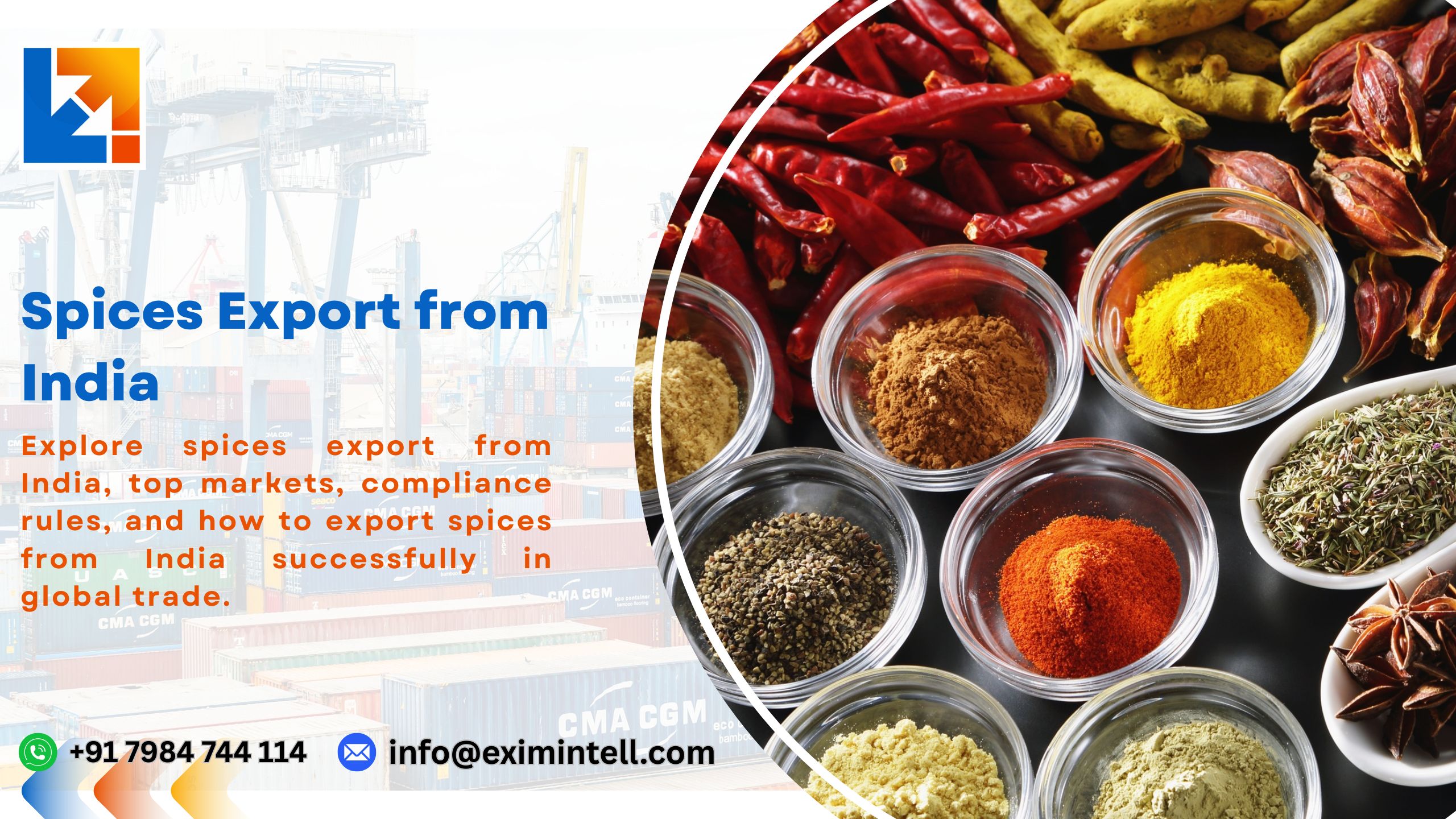
India is known as the land of spices as it has been the largest producer of spices for the longest time. Today, spices export from India to over 180 countries, making it one of the most important players in the spice trade. India is known for the quality of its spices as it offers turmeric, cumin, cardamom, and chili, among others. These spices are known for their strong aroma, absolute purity, and strong flavor. Due to the rapid growth of spice exports from India, it is evident that India is the most dominant player in the spice industry. India is the most common name that comes to the mind of global buyers when asked about the largest producer of spices.

India’s Strong Production Advantage

With over 70 spice varieties produced, India is the most diversely populated spice-producing country in the world. The expanding spices export from India is the result of improved traditional farming methods, favorable climatic conditions and soils. Over the years, the Indian spices export industry has modernized its systems of processing, quality control laboratories, and packaging to meet the needs of international standards.

Exporters wanting global reach are studying how to export spices from India professionally for the first time. A long-term relationship with buyers requires a professional spices exporter to manage grading, moisture, and global food safety.

Rising Global Demand for Indian Spices

The increasing demand for natural and organic food ingredients has strengthened spice exports from India across multiple continents. This is primarily due to Indian spices being considered a natural and organic food ingredient, which is now in high demand throughout the world. Indian spices are being used in processed food, ready-to-eat meals, pharmaceuticals, and health supplements. The boosts in Indian spices exports are due to quality, price, and reliability.

Before exporters learn how to export spices from India, they must understand the laws and legal documentation involved in order to be in compliance with laws. Once a professional spices exporter gains control over the export permit, quality certifications, and the tracking of shipments, he will complete all of the steps necessary for the shipment to export without any other legal issues.

By offering professional services, Import Export Services are able to assist in obtaining the necessary documentation, export permits, and trade control for the exporter, thereby improving the streamlined end-to-end export process.

Compliance and International Standards

The immense growth of spices export from India is influenced by the compliance to international standards and regulations that is practiced by the exporters. These exporters comply with the requirements for hygiene, packaging and labeling as directed by the importing country. An example will be the United States where exporters have to comply with the requirements of the Food and Drug Administration that is concerned with the safety of food and protection of consumers.

The exporters of spices from India have to carry out laboratory tests and obtain the results of the tests, obtain a phytosanitary certificate, carry out fumigation, and comply with packing regulations. These regulations strengthen the credibility of the spice exports from India.

In anticipation for the exporters of India to comply with the regulations, These exporters can rely on the Exim Consultancy Services to assist them in planning for the export and to provide them with the guidance on how to comply with the regulations.

Key Spices Driving Export Growth

The following have been identified to be the top contributors to spices export from India;

  • Turmeric
  • Black Pepper
  • Cumin Seeds
  • Chili Powder
  • Coriander
  • Cardamom

These spices are exported in whole, powdered, and processed forms. As global markets continue to question which country is the largest producer of spices, India’s consistent production volume and export diversity reinforce its leadership. The steady rise of indian spices export proves the country’s ability to meet bulk international demand without compromising quality.

How to Export Spices from India Successfully

How to successfully export spices from India is what most entrepreneurs ask when starting an export business. Steps to be taken include:

  1. Import Export Code (IEC)
  2. registering with the concerned authorities and export councils
  3. sourcing from spices suppliers
  4. quality checking
  5. finding international buyers and contract signing

Successful spices exporters also put great emphasis on market studies, competitive pricing, and good logistics. With the increase of consumption in the market, spices export from india is highly profitable. This is a good business opportunity for both novice and experienced exporters.

Economic Contribution and Future Outlook

Spices export business growth contributes significantly to our country’s agricultural economy. With the growth of the Indian spices export market, millions of farmers, traders, processors, and logistics providers benefit as well. The improving and innovative traceability systems, digital platforms to export, and packaging systems greatly enhance India’s presence in the exports.

As health-conscious consumers worldwide prefer natural flavoring agents, the demand for Indian spices is expected to rise steadily. This consistent upward trend confirms India’s leadership when discussing which country is the largest producer of spices.

Innovation in organic certification and value-added blend spices is also helping to shape the future of spices export from India. Value-added blended spice exporters who learn how to export spices from India in a compliant and cost-effective way will continue to gain a competitive edge.

Conclusion

The strong production capacity, legal compliance, and varied destination points for exports all support the continued dominance of India’s exports of spices in the international marketplace. India’s spice exports are on an uninterrupted upward curve, illustrating the growing dependence of the world on India’s agricultural expertise.

Learning how to export spices from India and working with trade specialists to guide them will help businesses to capitalize on the opportunities that exist in the international marketplace for spice exports from India. The spices export from India will continue to drive the world’s food economy and trade.

Continue Reading →

Welcome to our blog post on insider tips for successful textile Fabric Exports from India! If you are in the business of textiles and looking to enter or expand your presence in the global market, then you have come to the right place. India has long been hailed as a hotspot for textile manufacturing, with its rich history, diverse range of fabrics, and skilled artisans.

In this article, we will delve into the secrets behind India’s success in textile Fabric Exports and provide you with valuable insights that will help you navigate this lucrative industry with confidence. Get ready to unleash the potential of Indian textiles and boost your export game like never before!

Introduction to Textile Fabric Exports from India

As the world’s second-largest producer of textiles, India’s textile exports are an important part of the country’s economy. To be successful in Fabric Exports from India, it is important to have a good understanding of the Indian textile market and the potential customers for your products.

The Indian textile industry is huge and employs over 45 million people. It is estimated that the industry will grow to $250 billion by 2019. There is a lot of competition in the market, but there are also many growth opportunities. The most popular exports from India are cotton fabrics, wool fabrics, and silk fabrics.

Some insider Tips can help you be successful in textile Fabrics Exports from India:

1) Do your research: It is important to have a good understanding of the Indian textile market before you start exporting. This will help you know what products are in demand and where your products fit into the market.

2) Find a good partner: Having a good partner in India will make exporting much easier. They can help with things like shipping, customs, and marketing your products.

3) Focus on quality: Indian buyers place a high importance on quality. If you can provide high-quality products, you will be more successful in selling to them.

4) Be patient: The process of exporting from India can take some time and it is important to be patient throughout the process.

Benefits of Fabric Exports from India

When it comes to textile Fabric Exports, India is a powerhouse. The country has a long history of producing high-quality fabrics, dating back to the days of the British Raj. Today, India is one of the leading producers of textiles in the world, and its fabrics are in high demand all over the globe.

There are many benefits to Fabric Exports from India. For one, the country has a large and skilled workforce that can produce fabrics at a lower cost than many other countries.

Additionally, India also has a wide range of raw materials and resources available, making it possible to produce a wide variety of fabrics. And finally, India has a large and growing market for textile products, making it an ideal place to sell your fabrics.

If you’re thinking about Fabric Exports from India, there are a few things you should keep in mind to ensure success. First, it’s important to choose the right type of fabric for your market. There are many different types of fabrics produced in India, so it’s important to select those that will be most popular in your target market.

Second, you’ll need to find reliable and reputable manufacturers that can provide you with high-quality fabrics at competitive prices. You’ll need to develop a good marketing strategy to promote your products to generate interest and sales.

following these insider tips will help you successfully Fabric Exports from India and tap into this lucrative market.

Steps for Legal Compliance for Fabric Exports from India

1. Familiarize yourself with the rules and regulations governing textile exports from India. These include the Export (Quality Control and Inspection) Act, 1963; the Foreign Trade (Development and Regulation) Act, 1992; and the Textiles Committee Act, 1963.

Fabric Exports from India

2. Make sure your products comply with all applicable quality standards set by the Ministry of Textiles.

3. Get all required licenses and registrations in order before exporting your textile products.

4. Apply for an Export Certificate from the Department of Commerce, which is required for most shipments.

5. Complete all necessary paperwork and documentation accurately and promptly. This includes commercial invoices, packing lists, bills of lading, export declaration forms, etc.

6. Pay attention to labeling requirements when packaging your textile products for export. All labels must be in English and should include important information such as country of origin, fiber content, care instructions, etc.

7. Choose a reliable shipping partner who has experience exporting textile products from India. They will be able to help you navigate the customs process and ensure your shipment arrives safely at its destination.

Regulations and Guidelines on Textile Fabrics Exports from India

When it comes to Fabric Exports from India, there are a few regulations and guidelines that need to be followed to ensure a successful shipment. Below is a rundown of what you need to know:

– All textile Fabric Exports from India must be carried out through an appointed Export House or Trading House registered with the Textile Commissioner.

– A Shipping Bill/ Bill of Exporting must be filed with the Customs authority at the port of exit.

– The value of the shipment should be declared correctly and accurately to avoid any delays or issues at customs.

– All textile fabric shipments from India must be accompanied by a valid Certificate of Origin, issued by the concerned Export House or Trading House.

– Make sure to carefully pack and label your shipments, to avoid any damage during transit.

Following these simple regulations and guidelines will help ensure a smooth and successful Fabric Exports from India.

Key Considerations When Planning an Export Strategy

When planning an export strategy for textile fabrics, there are a few key considerations to keep in mind. First, you need to identify your target markets. Where do you want to sell your fabrics? What type of buyers are you targeting? Once you have a good idea of your target market, you need to develop a product mix that will appeal to them. What type of fabrics do they need? What colors and patterns are popular in their markets?

You also need to consider logistics when planning your export strategy. How will you get your fabrics to your buyers? You need to choose reliable and cost-effective shipping methods that will deliver your products on time.

And finally, you need to think about pricing. What is the right price for your fabrics in the current market? How can you ensure that you are competitive without undercutting yourself?

Answering these questions will help you develop a comprehensive and successful Strategy of Fabric Exports from India.

Resources Available to Help You with Textile Exports from India

The Indian textile industry is one of the largest in the world and is a major contributor to the country’s economy. The sector employs over 45 million people and produces a wide range of products including cloth, yarn, carpets, and garments.

The Indian government provides several resources to help companies export textile products from India. The Ministry of Textiles provides information and guidance on various aspects of the textile industry, including export procedures and regulations.

The Export-Import Bank of India offers financial assistance to companies exporting textile products from India. The Trade Promotion Council of India also provides information and support to companies interested in exporting from India.

In addition to government resources, several private organizations provide support for companies exporting textile products from India. These organizations include the Federation of Indian Chambers of Commerce and Industry, the Confederation of Indian Industry, and the Indo-American Chamber of Commerce.

These organizations can provide valuable information and assistance with marketing, financing, shipping, and other aspects of exporting from India.

Conclusion

Textile fabric export from India is a booming business and with the right insider tips, you can easily capitalize on this growing industry. Through diligence and attention to detail, understanding color trends in fashion, considering seasonality when selecting fabrics, researching potential markets abroad, and learning about available trade agreements, almost anyone can have great success exporting textile fabrics from India.

We hope these tips have provided a starting point for your journey into taking advantage of the vast opportunities that exist within the global market for Indian textile fabrics.

Continue Reading →

Have you ever thought about venturing into the world of international trade? Are you looking for a lucrative business opportunity that combines sustainability and profitability? Well, look no further!

India, the land of vibrant textiles and diverse culture, presents an exceptional avenue for aspiring entrepreneurs. In this blog post, we delve into the intriguing realm of cotton export in India – a venture that promises immense potential and abundant opportunities. Join us as we explore why starting a cotton export business in this subcontinent makes complete sense.

Introduction: The Benefits of Starting a Cotton Export Business in India

Cotton is one of the most important crops in India and is grown extensively throughout the country. Cotton exports from India have been growing steadily over the past few years and currently stand at around $5 billion. The Indian cotton industry has several advantages that make it an attractive proposition for foreign investors.

First of all, India has a large area under cotton cultivation and is thus able to meet the global demand for the commodity. Secondly, Indian cotton is considered to be of high quality and is in great demand internationally. Thirdly, the cost of production of cotton in India is relatively low when compared to other major producing countries. This makes Indian cotton exports very competitive in the international market.

Apart from these factors, there are various other reasons why starting a cotton export business in India makes sense. These include the fact that there is a growing domestic market for textile products, the existence of a large number of skilled workers in the industry, and preferential trade agreements with several countries. All these factors make starting a cotton export business in India a very lucrative proposition.

Overview of the Indian Cotton Industry

The Indian cotton industry is one of the largest in the world, with production totaling more than 5 million metric tons in 2017/18. The country is also the second-largest exporter of cotton, behind only Brazil. In recent years, India has become an increasingly attractive destination for foreign investors looking to tap into the global cotton market.

There are several reasons why starting a cotton export business in India makes sense. First, the country has a large and growing production base. Second, government policies are supportive of the export sector. Third, there is a strong demand for Indian cotton both domestically and internationally.

Due to its large production base, India can offer a wide range of grades and qualities of cotton. This makes it an appealing destination for buyers looking for specific types of fiber. Additionally, the Indian government provides several incentives and benefits to companies engaged in exports, making it an attractive place to do business.

There is a strong demand for Indian cotton globally. This demand is driven by several factors, including the quality of Indian cotton and the country’s reputation as a reliable supplier. In addition, India’s proximity to major markets like China and Bangladesh gives it a strategic location advantage when selling into those markets.

Challenges Faced by Exporters in Cotton Export Business

The cotton export business in India has been facing several challenges in recent years. These include:

1. Difficulty in sourcing raw materials: The Indian cotton industry is heavily reliant on imported raw materials, as the country does not have enough land to cultivate its own. This dependence makes the industry vulnerable to changes in global prices and supply shortages.

2. Fluctuations in demand: The demand for cotton exports fluctuates greatly depending on international market conditions. This makes it difficult for exporters to predict their sales and plan their production accordingly.

3. Lack of infrastructure: The lack of proper infrastructure is a major challenge faced by the cotton export business in India. There are not enough warehouses, ports, and other facilities to cater to the needs of the industry. This often leads to delays and disruptions in shipments.

4. Competition from other countries: India faces stiff competition from other major cotton-producing countries such as China and Brazil. These countries have an advantage over India in terms of cost, quality, and logistics.

5. Stringent quality regulations: The textile industry in India is subject to stringent quality regulations set by the government. This makes it difficult for exporters to meet all the required standards and get their products approved for export.

Steps to Start a Cotton Export Business in India

Cotton is one of the most important crops in India, and the country is one of the largest producers and exporters of the commodity in the world. If you’re looking to start a cotton export business from India, there are a few things you need to do.

1. Research the international market for cotton: Know where demand is coming from and what prices are like.

2. Get in touch with exporting firms in India: You’ll need to work with an exporting company that can get your product to market.

3. Apply for an export license: To export cotton from India, you’ll need to apply for an export license from the Indian government’s Export Inspection Council.

4. Find buyers for your product: Once you have your product ready, you’ll need to find buyers who are interested in purchasing it. This can be done through trade shows, online directories, or by working with a broker or agent.

Documentation Required for Indian Cotton Exports

To export cotton from India, producers must obtain a letter of credit from an Indian bank and present it to the buyer’s bank. The letter of credit must be countersigned by a recognized foreign bank. Producers must also obtain an export license from the Indian Department of Commerce. The license is valid for one year and allows producers to export a specified quantity of cotton.

Cotton Export

Regulations and Rules for Starting an Indian Cotton Export Business

Setting up a cotton export business in India has its own unique set of regulations and rules that must be followed. Here is a brief overview of what you need to know:

1) Firstly, all businesses registered under the Companies Act are required to obtain an Export-Import Code (EIC) from the Directorate General of Foreign Trade (DGFT). The EIC is necessary for availing various benefits and privileges such as duty-free imports, concessional rate of customs duty, etc.

2) You will also need to obtain a Registration-Cum-Membership Certificate (RCMC) from the relevant export promotion council or commodity board. This will entitle you to several benefits such as lower interest rates on pre and post-shipment finance, participation in global trade fairs, etc.

3) To start exporting cotton, you will need to register with the Cotton Corporation of India (CCI). The CCI issues an Export Licence which is required for shipping cotton out of India.

4) All exporters are required to furnish an undertaking called ‘Advance License’ issued by the DGFT before starting commercial export shipments. This ensures that all exports are made against firm orders and contracts only. Undertakings can be given on behalf of companies or legally recognized partnerships. However, proprietorships are not allowed to give undertakings.

5) Shipping bills or Bills of Lading are required for exports by sea and Airway Bill is required for exports by air.

6) Shipping documents, a copy of the export license and RCMC must be made available to customs officials for clearance procedures.

7) You may also need to obtain a Certificate of Origin from the relevant authority to avail special benefits while exporting under various international trading arrangements.

8) Finally, you will need to open an E-payment account in any nationalized bank. This account will be required for submitting online applications and for making payments to government bodies and port authorities.

Tips to Ensure Success with Your Indian Export Business

As the world’s second-largest producer of cotton, India is an obvious choice for anyone looking to start a cotton export business. But there are a few things you should keep in mind to ensure success.

First, it’s important to understand the Indian market. What types of products are in demand? What are the buyer preferences? How does the competition operate? Conducting market research will give you a better understanding of these factors and help you make better decisions about your business.

Second, build strong relationships with your suppliers. In India, cotton production is often done by small farmers, so you must establish good relationships with them. This way you can be sure to get a consistent supply of quality cotton.

Third, choose the right logistics partner. When shipping cotton from India, you need to find a reliable and experienced logistics partner who can handle all the details of transportation and customs clearance. Otherwise, your shipments could be delayed or even lost.

Fourth, be patient. Rome wasn’t built in a day and neither is a successful export business. It takes time to develop relationships, find suppliers, build up inventory, and get everything else in order. Don’t expect instant results; focus on building a solid foundation for long-term success.

Conclusion

In conclusion, starting a Cotton Export Business in India makes plenty of sense. Cotton is a highly sought-after commodity globally and India has the opportunity to capitalize on this with its natural abundance of raw materials.

By establishing supply chains and infrastructure, Indian businesses can leverage their access to global markets while providing employment opportunities for local communities. Furthermore, with the positive macroeconomic factors at play in India currently and increasing free trade agreements, now may just be the perfect time to launch an export business based on cotton products from India!

Continue Reading →

India stitches clothes for buyers in almost every corner of the world. From Tiruppur knitwear to Jaipur block prints, our factories already supply big global labels. If you run a small unit or trade garments locally, Exporting Clothes from India is a realistic next step, not a distant dream.

The catch is that most first time exporters get stuck on paperwork, pricing, and finding that first serious buyer. We have watched good manufacturers lose months because nobody explained the basic order of steps. This guide fixes that with a plain, practical route you can actually follow, from your first registration to your first payment landing in the bank.

The good news is that the export system works the same way across sectors. Pharma companies, food shippers, and garment makers all start with the same registrations and customs logic. If you want to see how another industry handles it, our guide on Successful Exporting Medicines from India shows the process from a different angle.

  • Register your business and get an Importer Exporter Code (IEC)
  • Pick a narrow product range and learn its HS code
  • Find verified buyers and agree on clear payment terms
  • Price every order with freight, duty, and bank charges included
  • Ship with correct documents so customs clears goods without delay

Why Exporting Clothes from India Makes Sense

India has cotton, cheap skilled labour, and a full supply chain from yarn to finished garment. A buyer in Germany or the US can source fabric, dyeing, stitching, and packing from one cluster. That kind of depth is hard to find elsewhere, and it is the real reason Exporting Clothes from India keeps growing.

The government also supports apparel exporters through duty remission schemes like RoSCTL and RoDTEP, plus zero rated GST on exports. These are not free money, but they bring your landed cost down and make your quote sharper. Many small exporters ignore them in year one and simply leave margin on the table.

  • Strong cotton and synthetic fabric base inside the country
  • Specialised clusters such as Tiruppur, Ludhiana, Surat, and Jaipur
  • Export incentives that refund embedded taxes and duties
  • Steady demand from the US, EU, UK, UAE, and Australia

Step by Step Registration and Legal Setup

Before you talk to any foreign buyer, get your legal base in place. A proprietorship, partnership, LLP, or private limited company can all export. Open a current account with a bank that has an active foreign exchange desk, because you will need it for every inward payment.

Get Your IEC Code

The IEC is a ten digit code issued by DGFT, and you apply online with your PAN, bank details, and address proof. It usually comes within a few working days. Every exporter needs it, whatever they ship, which is why guides on Exporting Potatoes from India begin with the exact same step.

RCMC, GST and LUT

Next, register with the Apparel Export Promotion Council (AEPC) to get your RCMC. This certificate is needed to claim most export benefits. File a Letter of Undertaking under GST so you can ship without paying IGST upfront, which protects your working capital from getting blocked.

  • IEC from DGFT for customs identity
  • RCMC from AEPC for scheme benefits
  • GST registration and LUT for tax free exports
  • AD code registered with your port through the bank

Picking Your Product: What Sells Abroad

Do not try to export everything on day one. Buyers trust a supplier who does one category well and knows its sizes, fabrics, and compliance rules. Pick the garment your unit already makes best, then study the HS code under Chapter 61 for knitted items or Chapter 62 for woven ones.

How to Export Casual Wear from India

Casual wear is the easiest entry point because demand is wide and designs are simple. If you are learning how to export casual wear from india, start with basic tees, polos, and lounge sets in cotton. Get lab tested for colour fastness and shrinkage, since most overseas buyers ask for test reports before the first order.

How to Export Sweatpant from India

Sweatpants fall under knitted goods, and fleece or French terry is what most buyers want. Anyone asking how to export sweatpant from india should focus on GSM consistency, elastic quality, and size grading for US and EU charts. Small errors in waistband stretch lead to heavy returns, so sample carefully.

How to Export Trouser from India

Woven trousers, chinos, and formal pants sell well to retail chains and uniform suppliers. To work out how to export trouser from india, master fabric shrinkage, button strength, and accurate inseam measurement. Every container you ship also brings foreign exchange home, and our piece on how Importing and Exporting Impacts the Economy explains why that matters.

How to Export Shirt from India

Shirts are one of India’s strongest garment categories, especially cotton and linen. The answer to how to export shirt from india begins with a tight tech pack covering collar spec, stitches per inch, and button type. Buyers in the UK and Australia are picky about fit, so send fit samples before bulk.

How to Export Blouse from India

Blouses, kurtis, and printed women’s tops attract boutique buyers and online stores abroad. If you are figuring out how to export blouse from india, lean on handwork, prints, and natural fabrics that Indian clusters do better than most. Keep minimum order quantities low at first to win smaller buyers.

  • Choose one category and build a sample range of 15 to 25 styles
  • Get third party lab tests for colour fastness and shrinkage
  • Prepare size charts that match the target market exactly
  • Photograph samples cleanly for buyer catalogues and B2B portals

Finding Buyers and Getting Expert Help

Finding the first buyer is the hardest part. Trade fairs like those run by AEPC, B2B portals, LinkedIn outreach, and buyer data from shipment records all work. An experienced import consultant can shorten this stage by telling you which countries actually buy your product and at what price. They can also warn you about markets with long payment cycles or tough import rules, which is the kind of insight that usually takes years to learn alone.

Many new exporters also hire import export consulting services to manage documentation, compliance, and buyer verification. A good consultant checks HS codes, flags restricted dyes, and explains labelling rules for each market. Paying for that advice is cheaper than one rejected shipment sitting at a foreign port.

Buyer research is easier when you can see real shipment data. Check who is importing your exact HS code, how often, and from which Indian suppliers. Our articles on the export import business cover how traders use this data to shortlist serious buyers and avoid time wasters.

  • Shortlist buyers using trade data, not random email lists
  • Ask an import consultant to verify company registration abroad
  • Compare two or three import export consulting services before signing any retainer
  • Attend at least one apparel trade fair in your first year
  • Never ship on open credit to a buyer you have not checked

Costing, Shipping and Payments

Price your order on FOB or CIF terms, and include fabric, stitching, trims, packing, inland freight, and bank charges. Add a buffer for exchange rate movement. The costing logic stays the same whether you are working out how to export trouser from india or how to export shirt from india, only the fabric and trims change. Many new exporters quote too low, win the order, and then lose money on hidden costs they forgot to count.

Stage What You Need Who Handles It
Registration IEC, GST, LUT, RCMC Exporter with DGFT and AEPC
Product Prep HS code, lab test, tech pack Exporter and testing lab
Shipping Invoice, packing list, shipping bill Freight forwarder and CHA
Payment LC, advance, or DP terms Exporter’s bank
Incentives RoSCTL or RoDTEP claims Exporter through customs portal

For payment, start with advance or a confirmed Letter of Credit until you trust the buyer. Cover larger orders with ECGC credit insurance. Work with a freight forwarder and custom house agent who handle garments often, because they know which documents customs will question. Knitted items need extra care here, so anyone learning how to export sweatpant from india or how to export blouse from india should confirm the HS code with their CHA before booking space.

  • Use FOB pricing when the buyer has their own forwarder
  • Ask for at least 30 to 50 percent advance on first orders
  • Keep commercial invoice, packing list, and certificate of origin ready
  • Claim export incentives soon after shipment so cash is not stuck

Smart Import Export Business Ideas in Apparel

Garments open many doors beyond simple bulk orders. Some of the best import export business ideas in this space come from small, focused niches rather than mass production. Think organic cotton basics, handloom shirts, or private label loungewear for online sellers in the US and Europe. Once you know how to export casual wear from india, adding a second category becomes much easier.

  • Private label manufacturing for Amazon and Shopify brands abroad
  • Sustainable and organic cotton clothing for EU buyers
  • Ethnic and fusion wear for the Indian diaspora market
  • Sourcing agent role connecting buyers with Indian factories

These import export business ideas need small capital to test and let you learn the market without heavy risk. Start with one buyer, deliver on time, and let repeat orders build your name. That steady approach is what turns a trial shipment into a real business.

Quality, Compliance and Labelling

Foreign buyers judge you on the first shipment, so quality control is not optional. Run inline checks during stitching and a final random inspection before packing. Many buyers send their own inspector, and a failed audit can cancel the whole order without payment.

  • Follow AQL inspection standards that the buyer specifies
  • Avoid banned azo dyes and restricted chemicals for EU orders
  • Add care labels, fibre content, and country of origin in English
  • Use carton markings exactly as given in the purchase order

Labelling rules change by market, and small mistakes cause big delays. The US asks for fibre content and care instructions, while the EU is strict on chemical limits under REACH. Good import export consulting services keep a checklist for each country, which saves you from learning these rules the hard way.

Common Mistakes New Clothing Exporters Make

Most failures in Exporting Clothes from India come from rushing, not from bad products. New exporters accept orders they cannot deliver on time, skip fit samples, or trust buyers they never verified. Not choosing the Right Incoterms for International Trade is another costly slip, because FOB or CIF decides who pays freight and who carries the risk at sea. Each of these mistakes is easy to avoid if you slow down a little in the first year.

  • Quoting prices without counting freight and bank charges
  • Shipping bulk before the buyer approves the pre production sample
  • Ignoring delivery dates, which hurts repeat orders more than price
  • Sending goods on open credit to unknown buyers

Conclusion

Exporting Clothes from India is not reserved for big factories. With the right registrations, one strong product, honest pricing, and careful buyer checks, a small unit can ship its first order within a few months. Whether you are a trader or already making garments, start small and get every document right.

Take one step this week. Apply for your IEC, build a sample range, and shortlist ten real buyers using trade data. Momentum matters more than perfection, and the first shipment teaches more than any guide ever will. Keep notes on every order, and your second year will feel far easier than your first.

FAQs

Q1: Do I need a licence for Exporting Clothes from India?

 Most garments need only an IEC and GST registration, with RCMC needed for incentives.

Q2: Can I start exporting from home? 

Yes, you can export as a trader by sourcing from local factories without owning a unit.

Q3: Is an import consultant worth it for beginners? 

For your first few shipments, expert help usually saves more than it costs.


Continue Reading →

Welcome to our blog! If you’re interested in the world of medicine exports from India, then you’ve come to the right place. In today’s post, we are excited to share with you some expert insights and top tips that will help ensure your success in this booming industry.

Whether you’re a seasoned exporter or just starting, these valuable insights will provide you with the knowledge and strategies necessary to navigate the complexities of Exporting Medicines from India. So sit back, relax, and get ready to learn how to take your medicine export business to new heights!

Introduction

In today’s rapidly globalizing world, Indian pharmaceutical companies are increasingly looking to expand their reach by exporting their products to new markets. However, exporting medicine can be a complex and bureaucratic process, with strict regulations put in place by both the receiving country and India’s government.

In this blog article, we’ll explore some of the top tips for successfully exporting medicines from India, courtesy of our expert panelists. These insights will help you navigate the export process more smoothly and avoid any potential pitfalls.

So let’s get started!

Guidelines for Exporting Medicines from India

When it comes to exporting medicines from India, there are a few key guidelines that should be followed to ensure a successful export process. First and foremost, it is important to have all of the necessary documentation in order before beginning the export process. This includes a valid export license, as well as any other required permits or licenses specific to the destination country.

Additionally, it is important to choose an experienced and reputable logistics partner who has experience with shipping pharmaceuticals. They will be able to assist with all aspects of the shipping process and can help ensure that your shipment arrives safely and on time.

It is also important to be aware of any restrictions or regulations regarding the import of medicines into the destination country. By following these guidelines, you can help ensure a smooth and successful exporting medicines from India.

Advantages of Exporting Medicines From India

There are many reasons why exporting medicines from India is advantageous. One key advantage is that India has a large and diverse population, which gives rise to a huge domestic market for medicines. This large market provides ample opportunities for Indian companies to gain experience in manufacturing and marketing their products.

Additionally, the Indian government is very supportive of the pharmaceutical industry and offers various tax incentives and subsidies to encourage companies to set up manufacturing operations in the country.

Another advantage of exporting medicines from India is that the country has a well-developed infrastructure for the pharmaceutical industry. India has a large number of qualified scientists and engineers, as well as sophisticated manufacturing facilities.

Additionally, the government has put in place several regulations to ensure the quality of medicines manufactured in the country. As a result, Indian-made medicines are held in high regard by international buyers.

Exporting medicines from India is advantageous because of the low cost of labor and raw materials in the country. This makes it possible for Indian companies to manufacture high-quality medicines at very competitive prices.

In addition, the Indian government provides several financial incentives to encourage exports of medicines from India. These include export duty exemptions and preferential access to certain markets.

Considerations to Keep in Mind During the Exports

When it comes to exporting medicines from India, there are a few key considerations to keep in mind to ensure a successful process. First and foremost, it is important to establish a clear and concise export plan. This plan should include a timeline of the export process, as well as detailed information on the products to be exported.

Additionally, it is important to have a strong understanding of the regulatory landscape in both India and the destination country. For example, some countries may have strict regulations on certain types of medicines, so it is crucial to be aware of these before export. It is also important to work with experienced and reputable partners throughout the export process. With these tips in mind, you can set your business up for success when exporting medicines from India.

Steps to Take When Exporting Medicines from India

Assuming that you have the requisite permissions in place, here are a few tips that will help you export medicines from India successfully:

Exporting Medicines From India


1. Familiarize yourself with the process: The first step is to gain a thorough understanding of the exporting process. This includes understanding the documentation required, the applicable rules and regulations, and the shipping procedures.

2. Identify a reliable partner: It is important to find a reliable partner who can help you with the exporting process. This could be a freight forwarder, a customs broker, or even a pharmacist in India who is familiar with the export procedures.

3. Make sure your products are compliant: It is crucial to ensure that your products comply with all the necessary regulations, whether it is regarding quality standards or labeling requirements. Make sure you have all the requisite documentation in place before attempting to export your products.

4. Pack your products properly: Proper packaging is essential to ensure that your products reach their destination safely and intact. Make use of durable packaging material and clearly label all packages with complete information about the contents.

5. Choose the right mode of transport: Selecting an appropriate mode of transport is another important aspect to consider when exporting medicine from India. Air freight is generally preferred for time-sensitive shipments, while sea freight is a more cost-effective option for less urgent shipments.

Best Practices for Exporting Medicine from India

When exporting medicines from India, it is important to adhere to best practices to ensure a successful shipment. Here are some tips to keep in mind:

1. Work with a reliable and experienced export agent who understands the regulations and requirements for exporting medicines from India.

2. Make sure all required documentation is in order before shipping, including certificates of free sale, import licenses, and any other necessary paperwork.

3. Properly pack and label your shipment according to the requirements of the country of destination.

4. Choose a reputable shipping company that has experience in shipping medical goods.

By following these tips, you can help ensure a smooth and successful export process when shipping medicine from India.

Essential Documents Required

There are a few essential documents required for exporting medicines from India. Firstly, you need to have a valid Export License from the Drug Controller General of India (DCGI). Secondly, you will need a No Objection Certificate (NOC) from the Ministry of Commerce. You will need to register with the Central Drugs Standard Control Organization (CDSCO). These are the essential documents required for exporting medicine from India.

Conclusion

With the right information and knowledge, exporting medicines from India can be a successful venture. Our list of top tips for successful exports is aimed at equipping you with all the necessary insight to facilitate smooth trade.

Whether you’re considering starting an Export Business or have been involved in this sector for some time now, these expert insights are sure to come in handy when seeking success in this ever-challenging field.


Continue Reading →